You can prevent garage door spring failures by treating the system like critical hardware. Know whether you have torsion or extension springs, then maintain them on a schedule. Lubricate springs, hinges, and bearings with silicone or lithium spray. Keep tracks clean, rollers smooth, and cables free of frays or rust. Test door balance to reduce spring strain. And don’t attempt high-tension adjustments yourself—some tasks require a pro. Want the exact steps and safe checkpoints?
Key Takeaways
- Lubricate springs, hinges, and bearings seasonally with silicone or lithium spray; wipe excess to reduce friction, noise, and stress.
- Keep tracks clean and aligned; tighten brackets and lubricate rollers lightly to prevent binding that overloads springs.
- Test door balance regularly with the opener disconnected; a door that won’t stay mid-travel signals spring or hardware issues.
- Inspect springs and cables for gaps, rust, frays, or kinks; address problems early before failure cascades.
- Avoid overuse and extra weight; don’t hang items on the door, and consider professional tune-ups and timely spring replacement.
Safety First: Garage Door Spring Basics
Although garage door springs seem simple, they store enough energy to cause serious injury if mishandled, so treat them with caution.
Identify your spring types: torsion springs mount above the door and provide controlled torque; extension springs run parallel to the tracks and stretch under load.
Know the warning signs—uneven lifting, excessive noise, visible gaps, frayed cables, or a door that won’t stay mid-travel.
Follow safety measures: disconnect power, keep hands clear of coils, never loosen set screws under tension, and use properly sized winding bars only.
Replace springs in matched pairs and verify the correct cycle rating for your door’s weight and usage.
Sudden loud bangs from the garage may signal a broken spring that requires urgent garage door repairs to avoid safety hazards.
Lubricate Garage Door Springs, Hinges, and Bearings
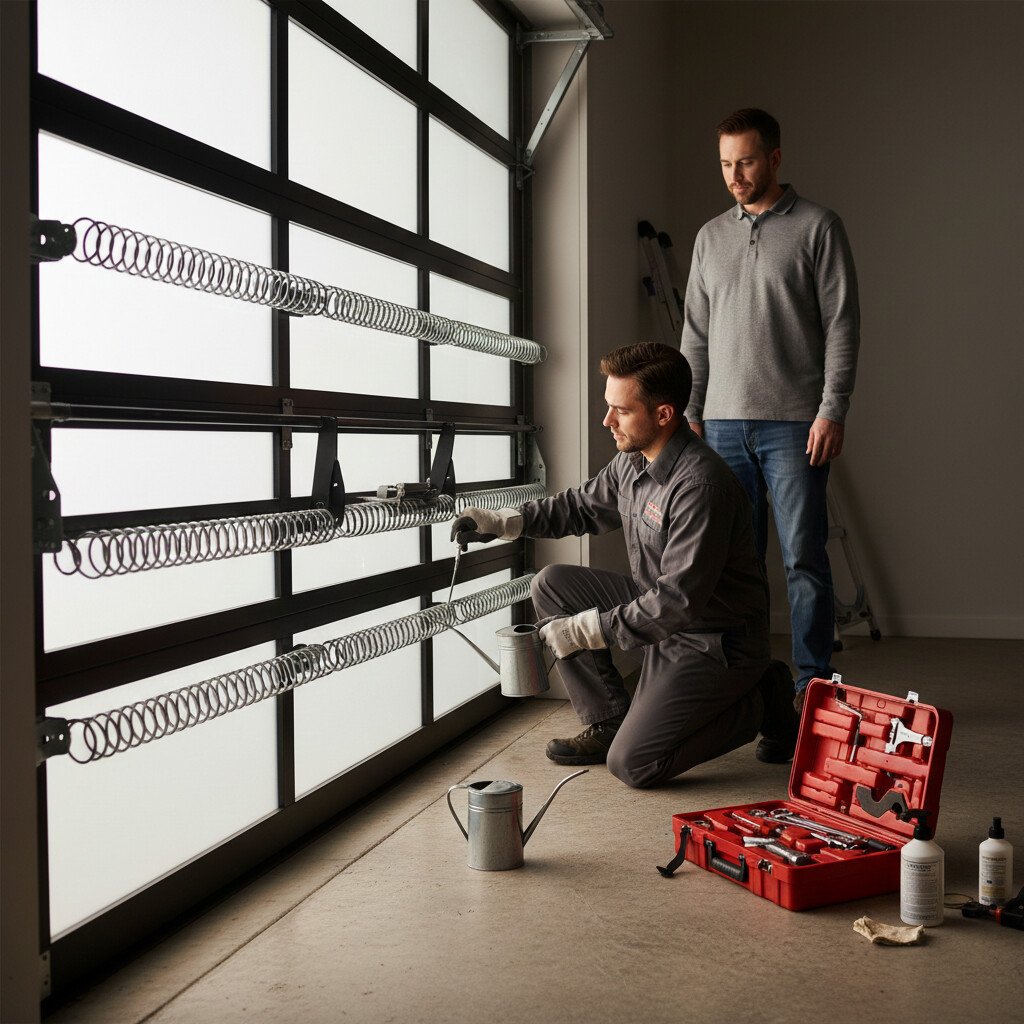
Two or three minutes of targeted lubrication each season reduces friction, noise, and stress on springs, hinges, and bearings.
Use silicone or lithium spray, not grease. Lock the door, disconnect the opener, and keep your hands clear of coils. Apply a light, even coat; wipe excess to avoid sling and dust buildup. Repeat during seasonal temperature swings to maintain spring balance and lifespan.
- A thin mist along torsion or extension spring coils—no drips, no pooling.
- A quick sweep at hinge pivot points until movement quiets.
- A brief burst at bearing plates and end bearings.
- A final cycle test verifying smooth travel and safe spring maintenance—proven lubrication techniques.
While regular lubrication and balance checks can extend the lifespan of your springs, there are situations where basic maintenance isn’t enough. If you notice uneven lifting, loud snapping sounds, or visible separation in the coils, it may be time to learn when to call a professional for garage door spring repair before a complete failure puts stress on your opener and tracks.
Clean Tracks, Lube Rollers, and Spot Cable Issues
One overlooked trio—clean tracks, lubricated rollers, and intact lift cables—keeps the door running straight and reduces spring strain.
For track maintenance, wipe rails with solvent, not oil; confirm alignment with a level; tighten loose brackets.
Lube rollers sparingly with silicone or lithium—avoid contaminating the track.
During cable inspection, unplug the opener, clamp the door, and look for frays, rust, kinks, or drum miswraps.
Never detach a tensioned cable; call a pro if defects appear.
| Feel | Risk | Action |
|---|---|---|
| Calm | Low friction | Clean tracks |
| Confident | Smooth travel | Lube rollers |
| Alert | Frayed strands | Stop use |
| Concerned | Rusting cable | Schedule repair |
| Safe | Secure hardware | Recheck fasteners |
If you spot worn rollers, rough track movement, or cable damage during preventive checks, replacing the correct component early can prevent bigger failures later. Use this DIY garage door parts checklist for common maintenance repairs to confirm what part you actually need before you order anything.
Test Door Balance to Protect Your Springs
With tracks true, rollers lubed, and cables sound, verify the door’s balance so the springs aren’t overworked.
Pull the opener release, then lift the door by hand to mid‑thigh, waist, and shoulder height. It should stay put with light force. If it drifts, spring tension isn’t matched to door weight and needs balance adjustment.
- Picture the door hovering at waist height—steady, no rise or drop.
- Imagine fingertips guiding it—minimal effort, smooth travel.
- See the panels align in the tracks—no racking or twist.
- Envision quiet pauses at three heights—consistent hold.
If behavior varies, stop operating and schedule a corrective adjustment.
A balanced door reduces strain not only on springs, but also on rollers, tracks, and the opener over time. If you want a practical system-wide approach, follow these long-lasting garage door maintenance upgrades to keep the entire setup running smoothly and reduce repeat repairs.
DIY vs Pro: When Spring Work Is Safe-and When It’s Not
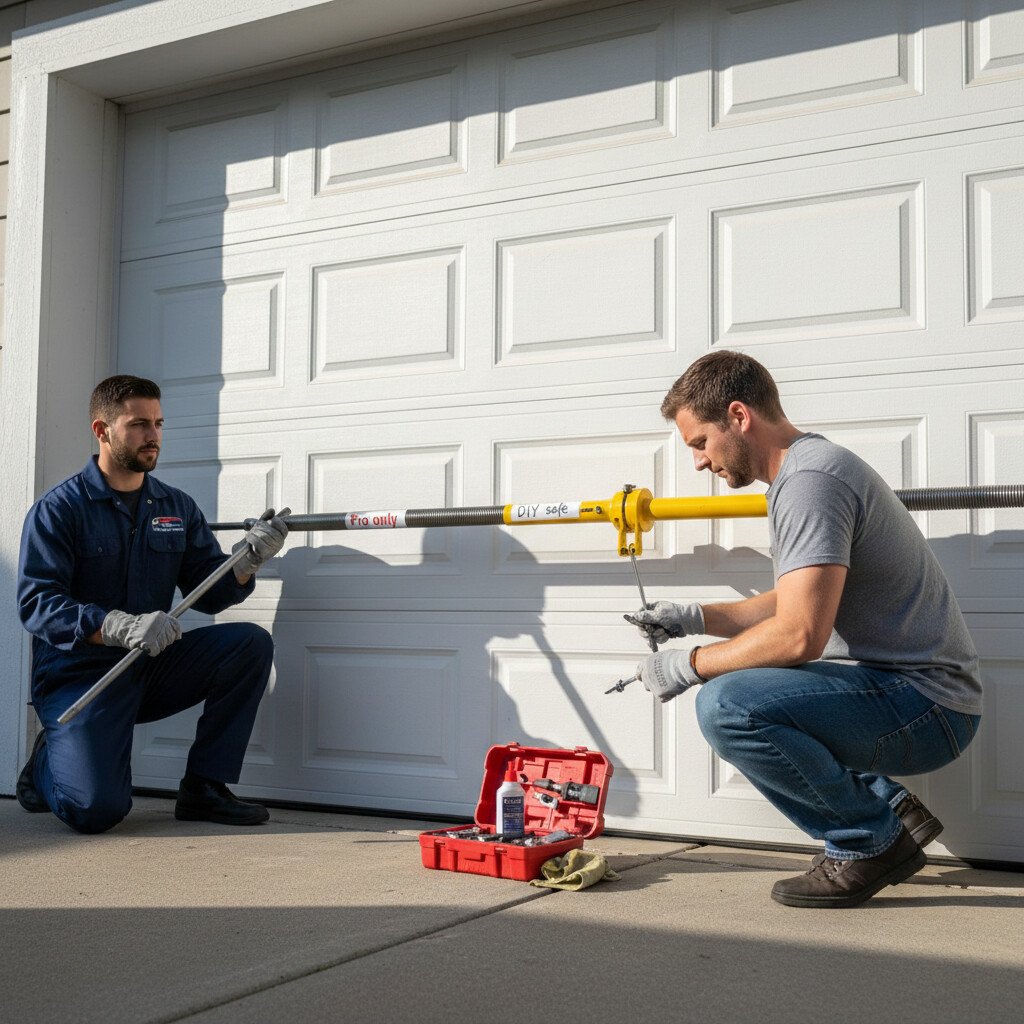
Although some garage tasks suit a capable DIYer, spring work demands strict hazard control because stored energy can maim. You can handle visual spring maintenance: inspect coils, lubricate, note gaps, and track cycle counts. Stop if you see rust, deformation, frayed cables, or mismatched hardware. Torsion spring installation techniques, winding, and conversions belong to pros with calibrated bars, clamps, PPE, and door-lockout procedures.
| Task | DIY Safe? | Why/Notes |
|---|---|---|
| Lube/inspect | Yes | Reduces friction, early detection |
| Balance check | Conditional | Only with opener disconnected |
| Replace torsion springs | No | High torque; risk of injury |
| Replace extension springs | Rarely | Containment cables and hardware needed |
Spring-related tasks are the point where “DIY” often stops being safe, even if the door issue seems minor at first. This guide on when to DIY garage door repairs and when to call a pro helps you make the call before spring tension turns a small job into a dangerous one.
Conclusion
You’ve got the tools to keep your garage door springs healthy: lube the springs, hinges, and bearings; keep tracks clean; check rollers and cables; and test door balance regularly. Fix minor issues early to prevent fatigue and corrosion. If you spot fraying, rust, gaps in coils, or hear sharp snaps, stop and call a pro—torsion springs store dangerous energy. Why risk injury when prevention’s simple? Stay consistent with maintenance, and your door will run smoother, safer, and longer.