Is it true that the best garage door repair companies look the same on paper but differ in execution? You’ll need to verify licensing, insurance, and certifications, then test their transparency with written estimates and clear warranties. Check local experience, emergency availability, and specialty repairs. Analyze reviews for patterns, not just stars, by noting response times, safety protocols, and parts sourcing. If a firm can’t meet these non‑negotiables, the next steps will make that gap obvious.
Key Takeaways
- Verify licensing, general liability and workers’ comp insurance, and manufacturer-certified technicians; refusals to provide proof are red flags.
- Demand written, line-item estimates and clear warranties (minimum: parts 1 year, labor 30–90 days) with no hidden fees.
- Check review volume, recency, and 3-star feedback for patterns; prioritize companies with professional, accountable owner responses.
- Confirm response metrics: same-day/24–7 service, average call-to-door time, first-fix rate, stocked trucks, and after-hours coverage.
- Ensure specialty capabilities and safety: torsion conversions, smart openers, entrapment procedures, PPE compliance, and jobsite cleanup standards.
Quick Checklist: Non‑Negotiables for Choosing a Garage Door Repair Company
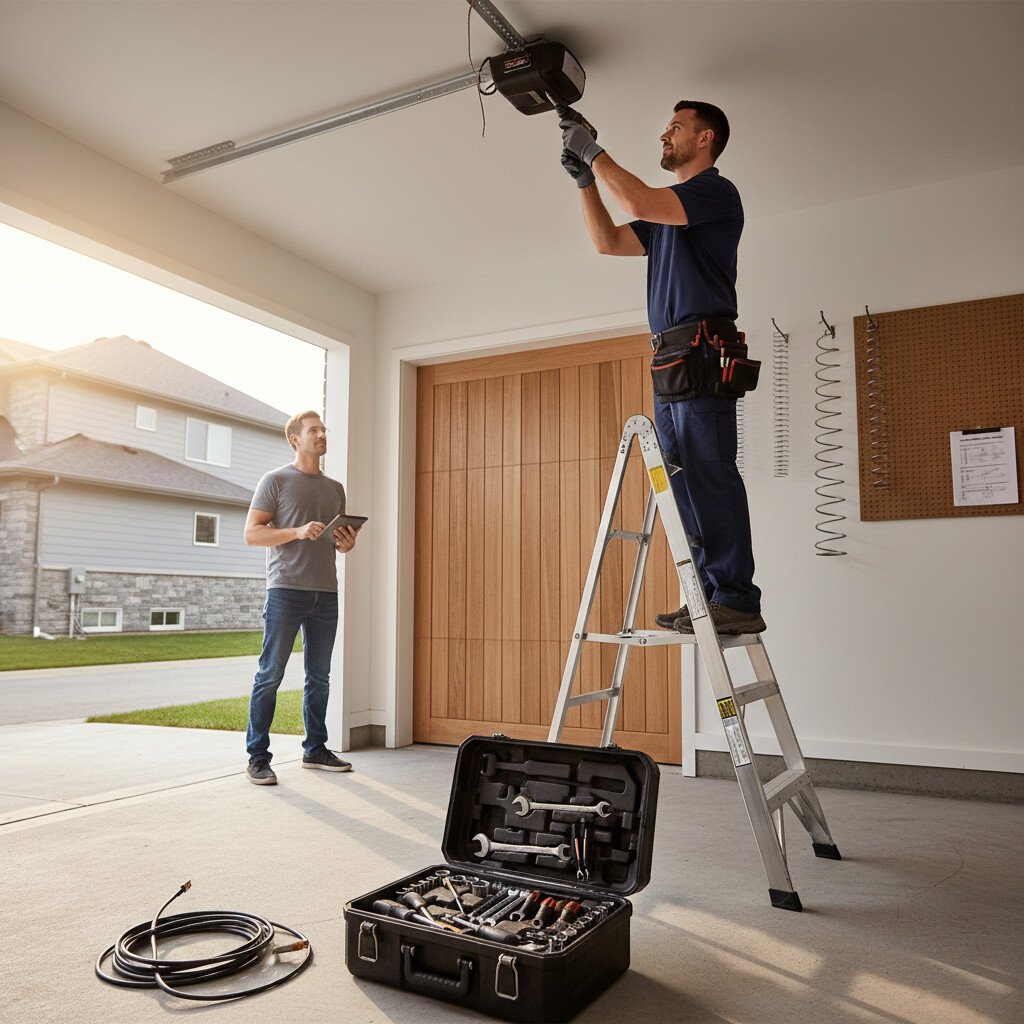
Before you book a technician, verify the non-negotiables: proper licensing and insurance (general liability and workers’ comp), manufacturer-certified technicians, same-day or 24/7 emergency service, written estimates with line-item pricing, stocked service vehicles for first-visit fixes, warranties on parts and labor (at least 1 year on parts; 30–90 days on labor), verified reviews (4.5+ average across 100+ recent ratings), transparent fees (no trip or “fuel” surprises), and proof of background checks.
Then validate performance signals. Scan customer testimonials for specifics: arrival time, first-pass fix rate, and post-repair support.
Demand written service guarantees with measurable remedies. Confirm parts sourcing, response-time SLAs, and payment options. Compare dispute resolution policies.
Licenses, Insurance, and Manufacturer Certifications to Verify
Paperwork protects you and sets apart true professionals: verify a current state contractor’s license (and any required city permit registration), active general liability insurance ($1M+ common) and workers’ compensation, and manufacturer certifications for the brands you own (e.g., LiftMaster, Clopay, Amarr).
Start with license verification through your state board’s database; confirm business name, status, and complaint history.
Request a certificate of insurance directly from the agent to validate insurance coverage limits and policy dates.
Ensure workers’ comp matches employee headcount.
Ask for factory training proof and authorized dealer status.
Document everything. If they refuse, walk.
Compliance reduces liability, voided warranties, and rework.
Credentials matter, but so does pricing transparency—good companies explain labor, trip charges, and parts clearly. This guide to understanding garage door repair pricing and estimate line items helps you judge whether a quote is fair before you hire anyone.
Local Experience, Track Record, and Specialty Repairs That Matter

Why pick a company that knows your streets, climate, and code inspectors? Because local experience reduces callbacks, speeds permits, and ensures parts fit regional conditions.
Ask how many doors they’ve serviced in your ZIP in the last year and their first-fix rate. A proven track record shows up in measurable outcomes and strong local reputation backed by repeat commercial accounts.
- Verify they handle specialty services: torsion conversions, high-cycle spring systems, smart openers, hurricane bracing.
- Confirm stocked trucks and same-day availability for common failures.
- Request data: average response time, warranty claim rate, and percentage of repairs completed without upsells.
How to Read Reviews for Garage Door Repair Companies (and Spot Red Flags)
How exactly should you read garage door repair reviews to separate signal from noise? Scan volume, recency, and consistency. High review counts across platforms improve review credibility. Read 3-star reviews first; they’re often balanced. Check specifics: arrival time, diagnosis accuracy, parts used, and post-service follow-up. Beware bursts of generic 5-star posts—spotting bias matters. Weigh owner responses: professional tone and corrective action indicate accountability.
Before you trust a rating or a “5-star” claim, it helps to know the common tricks dishonest companies use to look legitimate online. This breakdown of garage door repair scam red flags to watch for before booking will help you spot bait pricing, fake credentials, and pressure tactics early.
| Signal | Why It Matters | What To Do |
|---|---|---|
| Consistent themes | Indicates true performance | Look for repeated details |
| Time spread | Reduces manipulation risk | Check monthly distribution |
| Specificity | Shows authenticity | Favor concrete timelines, issues, outcomes |
Consistent positive feedback about completed garage doors repairing jobs often reflects dependable workmanship.
Transparent Pricing and Warranties: What a Fair Quote Includes
Ask for a written quote that itemizes labor and parts so you can compare apples to apples across providers.
Confirm there are no hidden fees for diagnostics, disposals, after-hours calls, or fuel surcharges—reputable shops disclose these upfront.
Require clear warranty terms that specify coverage length, parts vs. labor, transferability, and claim process.
A fair quote should also include context: whether the repair extends useful life or just delays a replacement you’ll need soon. This garage door “is repair worth it” evaluation checklist helps homeowners interpret estimates with lifespan, safety, and value in mind—not price alone.
Itemized Labor And Parts
Clarity starts with an itemized quote that breaks out labor, parts, fees, and warranties line by line.
You should see itemized estimates that specify technician hours, rates, and discrete parts with model numbers. This level of repair transparency lets you compare bids apples-to-apples and verify you’re paying market prices.
Ask for manufacturer and workmanship warranty terms on each component and task.
- Labor: hourly rate, estimated hours, and scope (diagnostics, adjustment, installation).
- Parts: brand, model, quantity, unit price, and warranty length.
- Fees: disposal, hardware, lubricant, travel, and taxes, listed separately.
Documenting each line reduces disputes, supports budgeting, and strengthens accountability.
No Hidden Fees
With an itemized quote in hand, you can spot the next hallmark of a fair bid: no hidden fees.
Demand an all-in price that lists labor, parts, trip charges, disposal, taxes, and surge/after-hours rates. Ask if diagnostics, lubrication, or safety tune-ups add extra.
Verify per-visit versus per-hour billing and minimums. Insist any necessary hardware is specified by brand and quantity.
Compare the written total to the technician’s verbal estimate; discrepancies flag hidden costs. Reputable firms publish price ranges online and match them onsite.
Documented, honest pricing correlates with fewer disputes and higher satisfaction. If fees appear vague, walk.
Clear Warranty Terms
Why do clear warranty terms matter as much as price? Because they quantify risk. Ask for written warranty coverage that states parts, labor, and exclusions with time frames (e.g., springs: 3 years parts/1 year labor).
Demand transferability details and claim procedures, including response times. You should also compare maintenance agreements; data shows routine service reduces repeat failures and preserves warranty validity.
- Verify what voids coverage: DIY adjustments, non-OEM parts, missed tune-ups.
- Confirm who honors claims: the installer, manufacturer, or both—and how to contact them.
- Get costs up front for extended warranty options and required maintenance visits.
Professionalism and Response Time: Communication, Safety, and Same‑Day Service
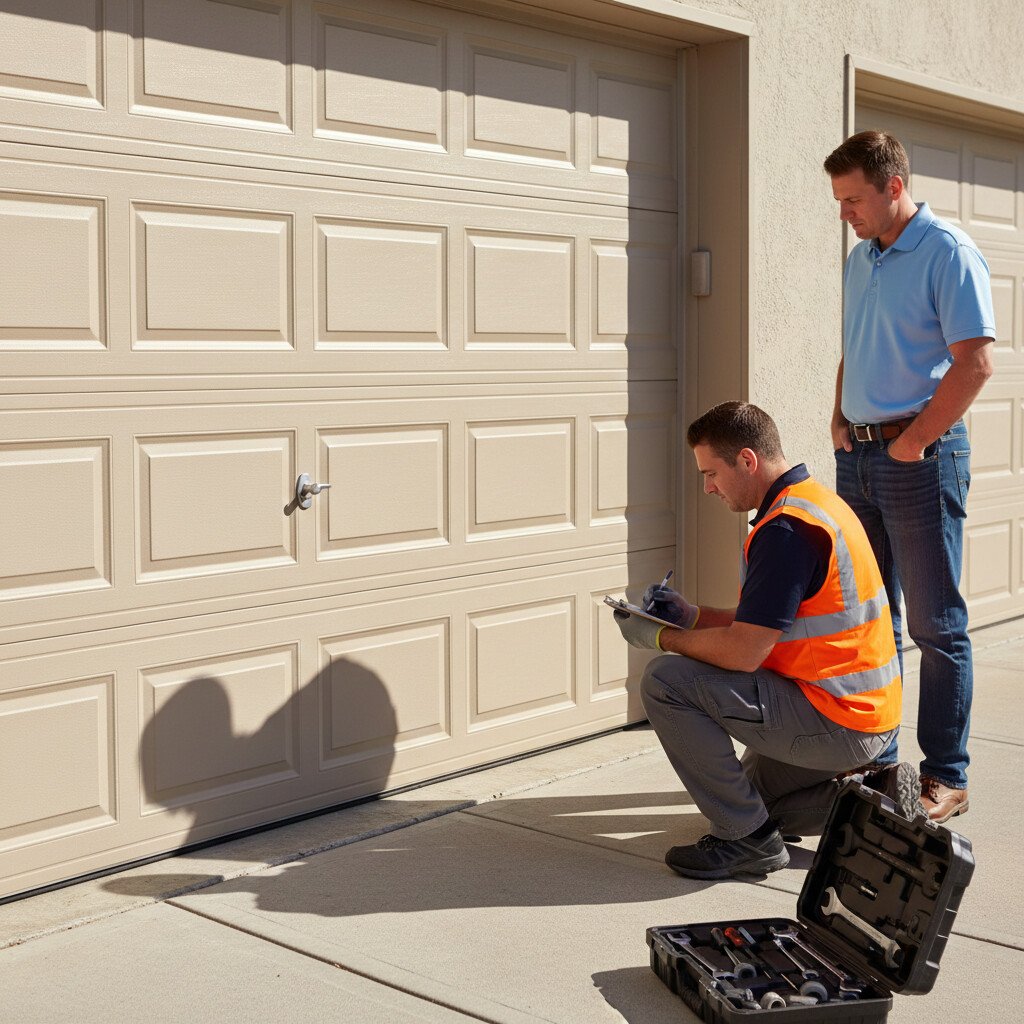
You should expect clear, prompt communication—calls or texts confirmed within minutes and ETAs you can track.
Verify safety-first procedures: technicians show ID, lockout power, use rated parts, and document checks per OSHA/ANSI guidance.
Look for reliable same-day service with published cutoff times and on-time arrival rates of 95%+ backed by a guarantee.
Clear, Prompt Communication
Even before a technician arrives, a reliable garage door company proves its professionalism through clear, prompt communication. You should see upfront pricing, appointment windows, and confirmation texts or emails.
Look for timely responses within business hours—top performers reply in under an hour, according to industry benchmarks and customer feedback. Ask how they’ll update you if schedules shift and who your point of contact is.
- Request written estimates with parts, labor, and warranty terms.
- Confirm communication channels: phone, SMS, email, or portal.
- Check reviews highlighting responsiveness and resolution speed.
Reliable communication reduces downtime, prevents surprises, and signals a company that respects your time and budget.
Safety-First Procedures
Although speed matters, a reputable garage door repair company leads with safety protocols that protect people, property, and technicians.
You should verify technicians complete OSHA-aligned training, lockout/tagout procedures, and spring containment practices. Ask whether they perform multi-point safety inspections—photo eyes, force settings, cables, drums, and auto-reverse tests—documented with checklists and before/after readings.
Confirm calibrated torque tools and UL 325 compliance. Review incident rates, proof of insurance, and background checks. Ensure they isolate power, secure doors, and cordon work zones.
Evaluate written emergency procedures for entrapment, broken springs, and vehicle impact. Demand clear signage, PPE usage, and jobsite cleanup standards.
Reliable Same-Day Service
Two traits separate reliable same-day service from empty promises: disciplined communication and documented readiness.
You should expect time-stamped ETAs, technician tracking, and written safety checks. Ask how they triage emergency assistance; reputable firms use dispatch software, stock common parts on trucks, and hit 90%+ same-day completion rates. Verify proof, not hype.
- Confirm response metrics: average call-to-door time, completion rates, after-hours coverage.
- Check logistics: live dispatch, on-hand inventory, certified techs for your opener/door model.
- Assess communication: proactive updates, photo estimates, and final reports.
These practices reduce repeat visits, contain costs, and raise customer satisfaction while keeping your door secure today.
Conclusion
You’ve got a clear playbook: verify licensing and insurance, confirm certified techs, and expect emergency service. Weigh local experience and specialties, read reviews for patterns, and demand itemized written estimates with warranties on parts and labor. Test responsiveness, safety protocols, and scheduling efficiency—same-day service often signals strong logistics. Why gamble with guesswork when transparent pricing and proven performance reduce risk? Choose the company that meets every non-negotiable and backs claims with data, not promises.