You can estimate garage door repair costs by matching symptoms to parts and labor. A loud bang often signals a broken torsion spring ($150–$350), while grinding points to worn rollers or misaligned tracks ($80–$180+). Opener issues may be sensors, gears, or logic boards, each priced differently. Size, material, and emergency service adjust totals. Knowing these cues helps you budget and choose DIY or pro service, but some fixes carry real safety risks and hidden cost traps.
Key Takeaways
- Match symptoms to parts: bangs mean torsion springs, grinding points to rollers/tracks, rapid clicking suggests opener electronics.
- Typical costs by issue: springs $100–$350+, cables $90–$200, rollers/hinges $75–$180, tracks $80–$300, openers $150–$700.
- Expect parts plus labor; request line-item quotes. Example spring total: $180–$360; logic board: $200–$380; rollers/hinges: $140–$300.
- Factors that shift price: door size, material, track/roller quality, and urgency; after-hours service increases dispatch and labor.
- DIY vs pro: align sensors or lube/replace rollers yourself; hire pros for torsion springs and complex opener repairs for safety.
- If the problem involves wiring or motor components, professional electric garage door repairs ensure accurate diagnostics and pricing transparency.
Garage Door Repair Costs by Problem (Fast Lookup)
Start by mapping the symptom to the likely component and its typical price range, then confirm with a quick inspection.
Use fast lookup bands for common garage issues to structure your repair cost estimates.
Springs:
- torsion $150–$350 each;
- extension $100–$200.
Cables: $90–$200.
Rollers: $80–$180.
Hinges: $75–$150.
Tracks (realign vs replace):
- $80–$150 /
- $150–$300.
Sensors: $75–$150.
Opener logic board: $150–$300; motor: $200–$400; full opener: $350–$700 installed.
Weatherstripping: $60–$120.
Panels:
- $200–$600 each;
- full door $800–$2,000+.
Labor adds $75–$150 per hour.
Verify part compatibility, cycle rating, and warranty before authorizing work.
Identify Your Garage Door Issue by Symptom and Sound
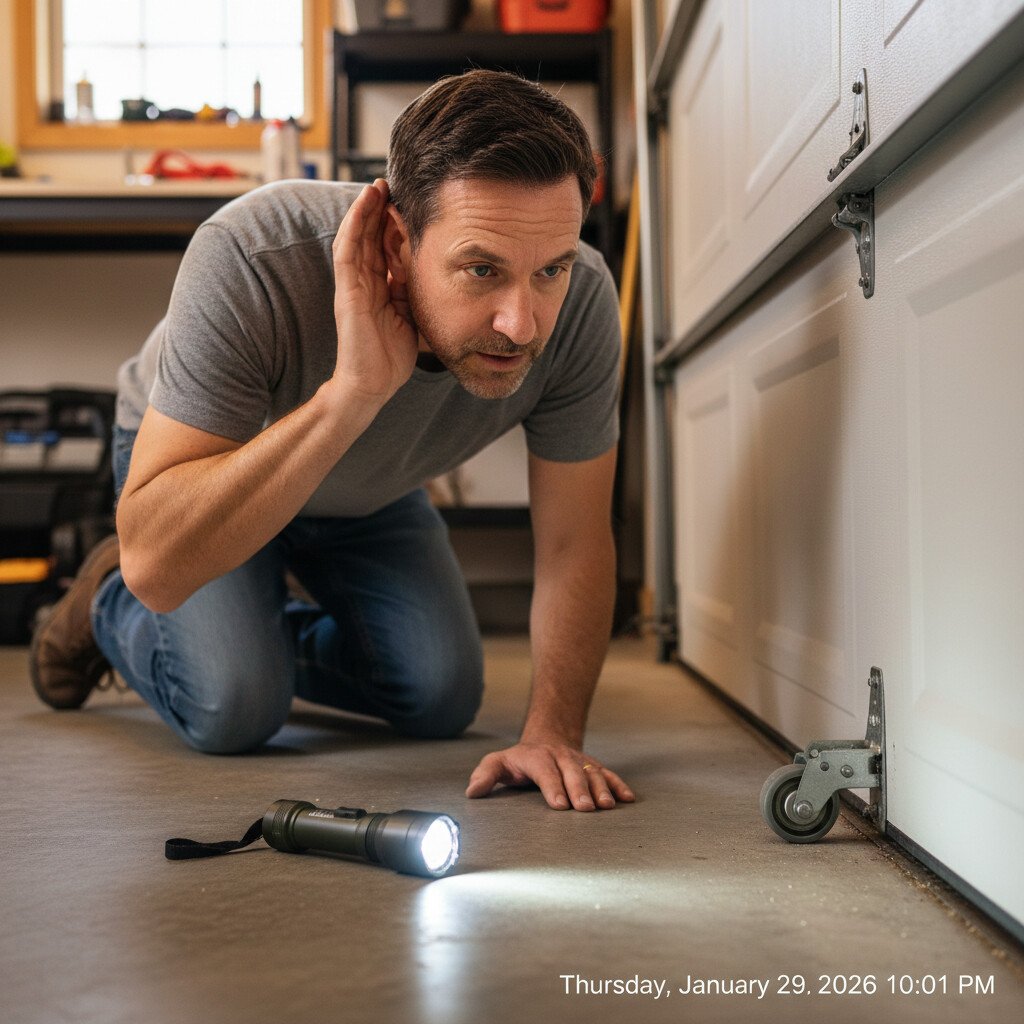
With cost bands in mind, match what you see and hear to the component most likely failing. Use symptom identification and sound analysis to pinpoint faults quickly and avoid cascading damage.
Observe motion, balance, and sensor behavior, then correlate noises to mechanics.
Observe motion, balance, and sensors, then map every noise to the mechanical culprit.
- Sharp bang, door won’t lift: torsion spring fracture. The door feels deadweight; don’t operate—risk of shaft damage.
- Grinding or screeching during travel: worn rollers or misaligned track. Look for flat-spotted nylon wheels, shiny rub marks, or bent rail.
- Rapid clicking, no movement: opener logic/safety circuit issue. Check photo-eye alignment, wiring continuity, and force limits; buzz plus heat suggests motor capacitor failure.
Sounds like squeaks, scraping, or banging are usually early warnings of loose hardware or worn rollers—not “normal noise.” This guide to fixing squeaky, grinding, and vibrating garage doors helps you handle the cause before it turns into more expensive damage.
Cost Factors for Garage Door Repairs: Size, Material, Urgency
Three variables drive most repair quotes: door size, door/track material, and response urgency.
Size considerations affect labor time, spring torque, and hardware load. Wider double doors typically require heavier springs, longer cables, and two-person handling.
Material choices drive part pricing and procedures: steel panels are common and economical; aluminum reduces weight but dents easily; composite resists corrosion; wood demands sealing and precise alignment to prevent binding; insulated doors add mass and stress on hardware.
Track gauge and roller type further influence cost.
Urgency changes dispatch fees and crew scheduling. After-hours or same-day calls add premiums; planned appointments minimize overhead and travel.
Size, material, and urgency matter—but homeowners also benefit from seeing the “big picture” of average price ranges and what typically drives estimates across different repair types. This complete garage door repair cost overview with real pricing drivers makes it easier to compare quotes and understand why costs vary so widely.
Parts vs. Labor: Garage Door Repair Pricing With Examples
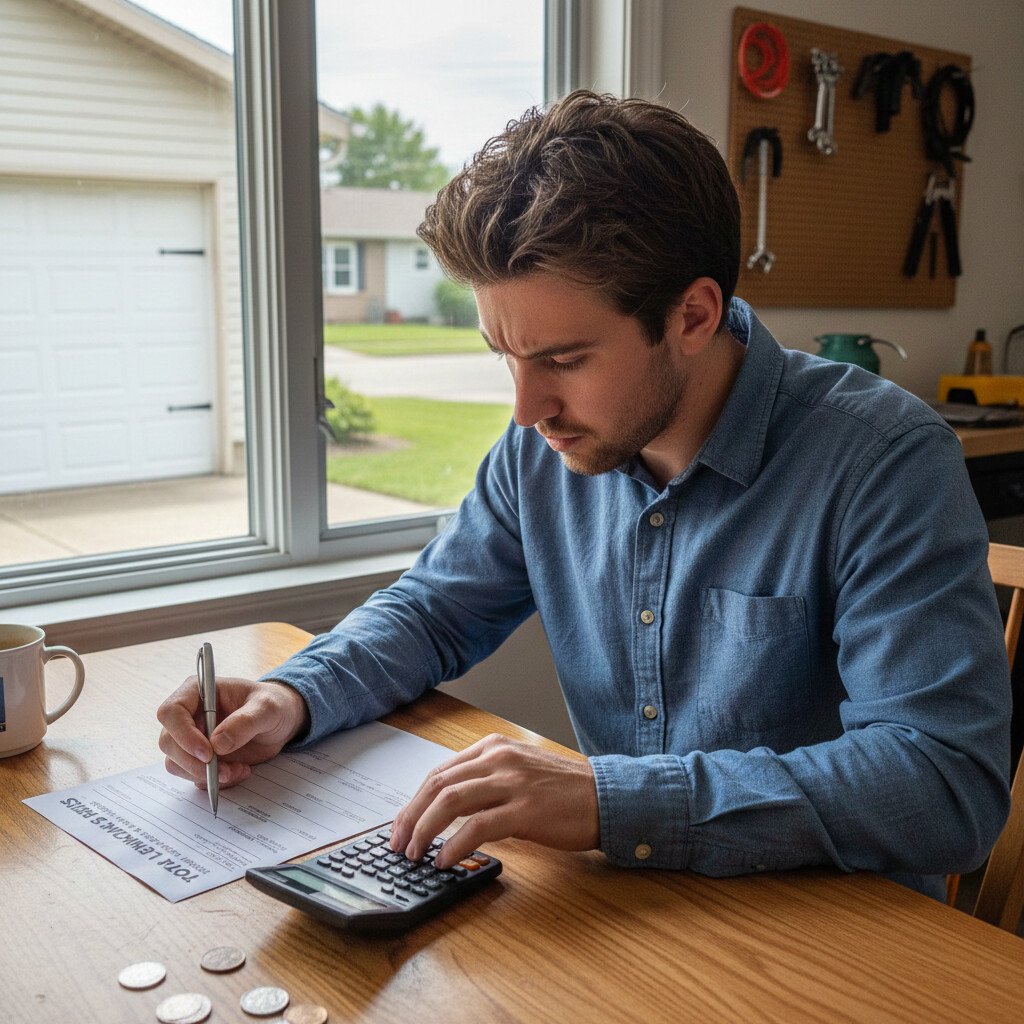
Two line items make up most garage door repair invoices: parts and labor.
Most garage door repair invoices boil down to two charges: parts and labor.
You’ll see parts pricing for components, then labor costs based on technician time. Parts vary by quality, brand, and duty cycle; labor varies by skill level and local rates. Expect a service call minimum plus time on site.
- Torsion spring replacement: parts pricing $60–$140 per spring; labor costs $120–$220; total $180–$360.
- Opener logic board: parts pricing $80–$180; labor costs $120–$200; total $200–$380.
- Roller and hinge set: parts pricing $40–$120; labor costs $100–$180; total $140–$300.
Spring repair costs vary depending on the type, size, and severity of the damage. However, waiting too long can increase labor and component expenses. Before minor wear turns into a complete failure, it’s important to understand when it’s time to call a professional for garage door spring repair to avoid higher long-term costs.
Request line-item quotes and warranties for both.
DIY or Pro? Safety, Time, and When It’s Worth It?
When should you tackle a garage door fix yourself, and when should you call a pro? Use risk, time, and cost as your filters. If a task involves torsion springs, high tension, or structural balance, hire a technician. For sensors, tracks, and lubrication, apply basic DIY tips with strict safety precautions—lockout power, clamp tracks, wear eye protection. Timebound? If the diagnosis exceeds an hour, outsource.
| Issue | DIY or Pro | Rationale |
|---|---|---|
| Photo-eyes misaligned | DIY | Low risk, simple calibration |
| Noisy rollers | DIY | Lubrication/replace nylon rollers |
| Broken torsion spring | Pro | High-tension hazards, special tools |
Spring-related repairs can get expensive fast when a small issue turns into a complete failure that also strains the opener, cables, or track. Using preventative habits to prevent garage door springs from breaking before failure is one of the easiest ways to avoid higher repair bills and urgent same-day service costs.
Choose precision over improvisation.
Conclusion
You’ve mapped the noises, traced the symptoms, and priced the culprits. Now, weigh size, material, and urgency like dials on a control panel. If it’s a spring under lethal tension, call a pro—don’t dice with physics. For rollers, seals, and sensors, you can tighten, lube, or swap with confidence. Separate parts from labor, forecast the bill, and choose accordingly. With clear diagnostics, you’ll steer repairs like a pilot through turbulence—swift, safe, and on budget.