It’s no coincidence you’re about to fix the door that moves the heaviest object in your home. Before any wrench turns, cut power to the opener, lock it out, and stabilize the door fully open or closed. Wear safety glasses and cut‑resistant gloves, and use only rated tools—winding bars, C‑clamps, and proper hardware. Treat springs and cables as live loads and work one side at a time. If anything feels off, stop—because the next steps matter more than you think.
Key Takeaways
- Disconnect and lock out power to the opener; tag controls and disable all remotes before any work.
- Secure the door fully open or closed with locking clamps on both tracks to prevent movement.
- Wear ANSI Z87.1 safety glasses, cut‑resistant gloves, and a hard hat; inspect PPE before use.
- Treat springs, cables, and torsion shafts as high-tension; use proper winding bars and redundant restraints.
- Adjust one side at a time, control releases in quarter-turns, and test safety systems (photo eyes, auto-reverse) after work.
Decide If This Garage Door Repair Is Safe to DIY
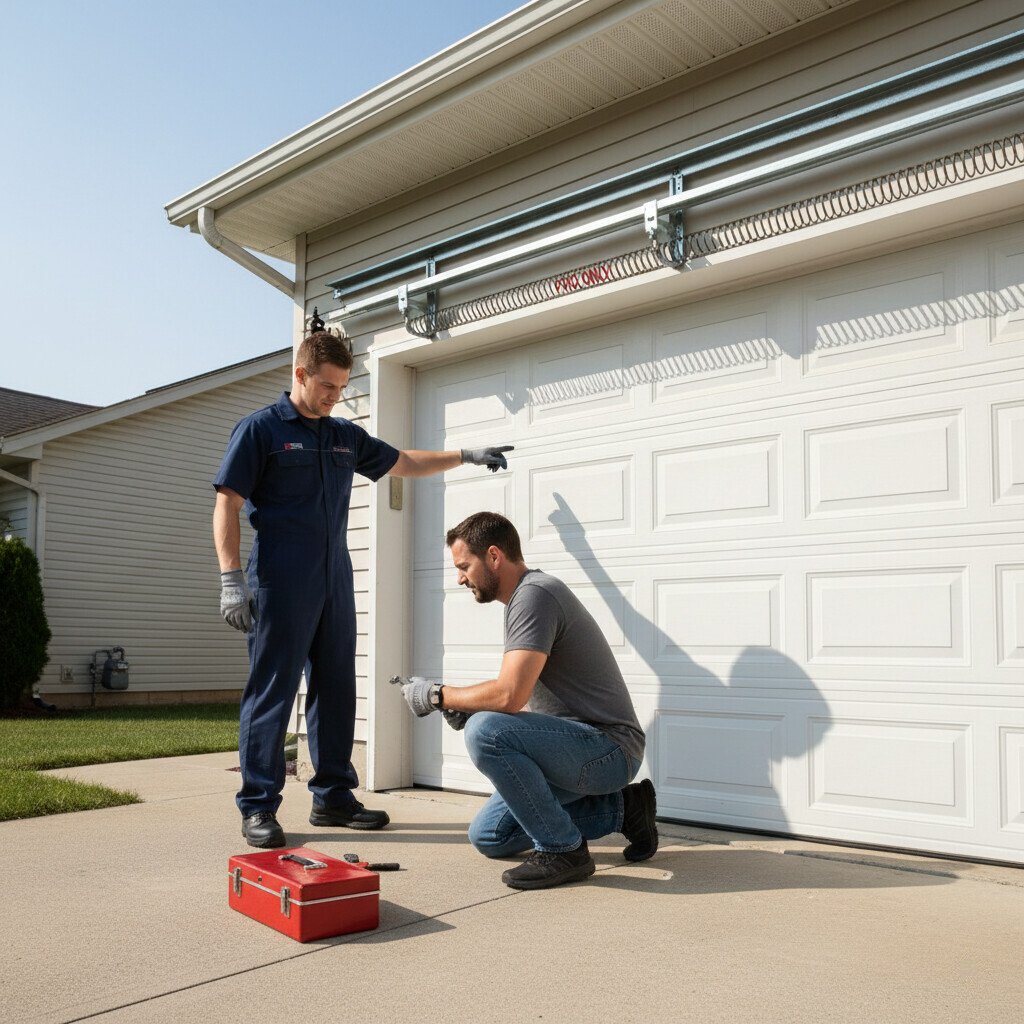
Before you grab tools, assess the repair’s risk profile and your capability.
Perform a safety assessment: identify moving loads, stored energy, pinch points, and required tolerances.
Define repair complexity by task: track alignment (low), roller replacement (moderate), cable or torsion spring work (high).
Check manufacturer documentation, part specifications, and the torque values you must achieve.
Evaluate your tools: calibrated wrenches, clamps, lift supports, and PPE.
Consider failure modes—door drop, binding, imbalance—and the consequences.
If you lack training, proper fixtures, or clear procedures, don’t proceed.
Choose tasks with predictable steps, controlled forces, and reversible adjustments.
When uncertainty remains, schedule a professional.
A smart safety decision isn’t only about today’s repair—it’s about reducing risky breakdowns in the future through prevention. This guide on preventive steps for long-term garage door reliability helps homeowners avoid repeat emergencies by maintaining the highest-stress components before they fail.
Cut Power and Lock Out the Garage Door Opener
Kill power to the opener to eliminate unexpected motion and shock hazards.
Unplug the garage opener from the ceiling outlet; if it’s hardwired, switch off the dedicated breaker and label it.
Unplug the opener or shut off and label its dedicated breaker before any work.
Verify power disconnection with a non-contact voltage tester at the opener terminals.
Disable all wireless inputs: remove batteries from remotes, pull the keypad battery, and disconnect any smart hub.
Engage the mechanical lockout by pulling the red emergency release only after confirming the door is stable.
Tag the cord and control wall switch: “Do Not Energize—Work in Progress.”
Keep the breaker locked out with a lockout/tagout device until repairs conclude.
Secure the Garage Door Fully Open or Fully Closed
Before you work, secure the door fully open or fully closed to eliminate unexpected movement.
Use locking clamps on the tracks to mechanically block travel, then verify they’re snug against the rollers.
After storms or freezing conditions, doors can bind unexpectedly or slip when you least expect it, so securing the door is non-negotiable before any inspection. This storm and freeze garage door repair safety walkthrough shows what to check first when weather may have shifted tracks, seals, or hardware.
Disable the opener’s power at the breaker and unplug the unit so no one can energize it during service.
If you notice any issues during inspection, it’s always safer to rely on a professional garage door repair service to ensure the problem is handled correctly and without risk.
Use Locking Clamps
Although it seems simple, securing the garage door with locking clamps is a critical control measure before any repair or adjustment.
Apply clamps to both side tracks just above a roller to hold the door fully open, or just below a roller to keep it fully closed. This prevents unintended travel, crush hazards, and spring recoil effects.
For proper clamp usage, choose heavy-duty, screw-type C-clamps sized for the track flange. Tighten until snug without distorting the rail. Verify clamp bite and roller contact. Test stability by gently pushing the door.
Locking clamp benefits include mechanical redundancy, predictable load restraint, and hands-free safety during alignment or hardware replacement.
Disable Opener Power
Once the door is secured fully open or fully closed with locking clamps, disconnect all opener power to eliminate unexpected activation.
Unplug the opener from the ceiling outlet; if hardwired, switch off the dedicated circuit breaker and apply a lockout/tagout if available.
Pull the manual release cord to decouple the trolley, confirming the door remains stationary under the clamps.
Verify zero voltage with a non-contact tester at the opener head.
Remove batteries from wireless keypads and vehicle remotes during work.
Post a “Do Not Operate” sign.
Restore power only after completing repairs and testing balance, force limits, and photo-eyes as part of opener maintenance and safety precautions.
Gear Up: Eye, Hand, and Head Protection for Repairs
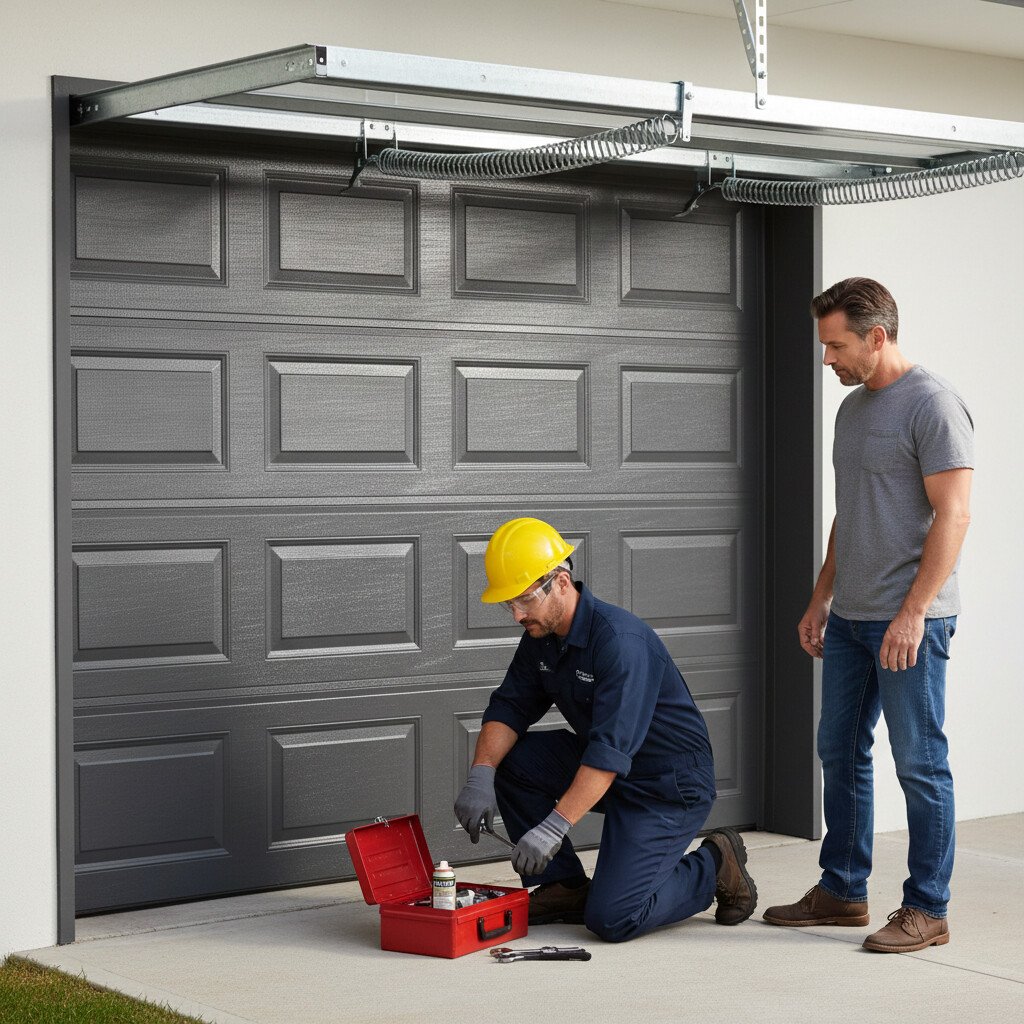
Before you touch torsion springs or tracks, put on safety glasses with side shields to block metal shavings and snapped cable whip.
Choose cut‑resistant, well‑fitting gloves that maintain dexterity while protecting against sharp edges and pinch points.
Wear a hard hat if you’re working under the door or near overhead components to guard against dropped tools or sudden component release.
Safety Glasses Essentials
Shrapnel. Springs snap, cables fray, and metal shards fly. Wear ANSI Z87.1-rated eyewear every time you tension, drill, or cut.
Choose safety glasses types that match hazards: wraparound for lateral debris, sealed goggles for dust, and face shields over glasses for high-impact grinding.
Prioritize lens protection features: anti-impact polycarbonate, anti-fog coatings for humid garages, scratch-resistant hard coats, and UV filtering for outdoor work.
Ensure a snug fit with adjustable temples and a nose bridge; gaps invite particles. Verify markings (Z87+ for high impact).
Replace lenses at first pitting or clouding. Clean with mild soap—solvents degrade coatings.
Durable Gloves Selection
With your eyes protected, match that rigor with the right gloves to guard against cuts, pinches, and chemical exposure.
Choose glove materials matched to hazards: cut‑resistant HPPE or Kevlar for sharp panels and cables; nitrile‑coated fabrics for oil resistance; full‑grain leather for abrasion and moderate heat; butyl or neoprene when solvents enter the workflow.
Verify ANSI/ISEA 105 cut, abrasion, and puncture ratings that meet your tasks.
Prioritize grip features: textured nitrile or micro‑foam palms for oily torsion bars, reinforced fingertips for cable handling, and secure closures.
Ensure a snug fit for dexterity, intact seams, and quick replacement when damaged.
Hard Hat Usage
One essential layer of protection is a Type I or Type II hard hat rated to ANSI/ISEA Z89.1, matched to your impact and electrical risks.
Choose Class G or E for energized openers or wiring; Class C only if no electrical exposure exists.
Verify fit: adjust suspension height and chin strap so the shell sits level and stable while you look up at torsion springs.
Inspect the shell and harness for UV chalking, cracks, and frayed straps before every task.
Replace after impacts or per manufacturer timelines.
Hard hat benefits include deflecting falling tools and recoil.
Follow hard hat standards without exception.
Use Proper Tools: Winding Bars, Clamps, and Rated Hardware
Although it’s tempting to improvise, garage door spring work demands the right tools: solid winding bars that fit your cone’s holes precisely, C‑clamps or locking pliers to secure the door to the tracks, and manufacturer‑rated fasteners and cables.
Use only purpose‑made winding bars—never screwdrivers or rebar. Confirm bar diameter and length match the spring cone. Seat each bar fully before turning.
Use purpose-made winding bars only. Match diameter and length; seat fully before turning.
Lock the door with two clamps, one above each lower roller. Replace frayed lift cables with OEM components. Torque and replace bolts with rated hardware only.
Verify drum set screws, bearing plates, and hinges to spec using calibrated hand tools.
Using the right tools is only half of safe DIY—using the right rated parts matters just as much, especially for rollers, hinges, cables, and track hardware. This resource on understanding garage door repair parts and buying the correct rated components helps you avoid unsafe, undersized, or incompatible replacements.
Keep Hands Clear of Tracks, Rollers, and Pinch Points
Even when the door seems still, stored energy and moving hardware can trap fingers in an instant, so keep hands clear of tracks, rollers, hinges, and panel joints at all times.
Practice hand safety with strict track awareness. Use tools, not fingers, to guide parts into position. Stabilize the door before reaching nearby hardware. Never reach between sections to “straighten” alignment.
- Visualize a no-touch buffer along tracks and rollers.
- Use hook tools to pull tabs, not fingertips.
- Clamp the door before inspecting hinge fasteners.
- Wear snug gloves that don’t snag.
- Keep communication clear: call out moves before anyone approaches.
Among all garage door components, torsion and extension springs pose the greatest safety risk due to the stored mechanical energy they contain. If you detect gaps in the spring, sudden door imbalance, or jerking movement, knowing the right time to call a professional for spring repair can prevent injuries and further system damage.
Treat Springs and Cables Like They’re Under Load
Treat springs and cables as if they’re always under high tension, even when the door looks still.
Use proper restraints—winding bars, locking pliers, and cable clamps—to secure components before loosening hardware.
Control release safely by unloading tension incrementally, maintaining a firm stance, and keeping bystanders clear.
Even when the door looks “fine,” springs and cables can still be under load, and a sudden release can cause injury. That’s why it’s smarter to stay ahead of failure with a maintenance routine designed to prevent garage door spring breakage through safer inspections and reduced wear over time.
Always Assume High Tension
Because stored energy can release without warning, assume every spring, cable, and linkage on a garage door is under high tension until you’ve verified and relieved it with proper tools.
You’ll protect yourself by controlling motion, isolating force, and maintaining spring safety discipline. Don’t touch coils, set screws, or anchor points casually; plan each move and keep your body out of the line of fire.
- Observe frayed cables, elongated coils, and shifted drums before touching anything.
- Stand to the side; never face the winding cone directly.
- Use rated tools; confirm fit and engagement.
- Move slowly; expect recoil.
- Re-verify zero tension before proceeding.
Use Proper Restraints
Before you loosen a set screw or pull a pin, restrain the system so a fault can’t run away on you.
Clamp torsion shafts with locking pliers against a structural stop. Use rated shaft collars or vise grips as redundant restraints.
Pin extension springs with safety cables; verify anchors and thimbles. Block the door with solid stops at tracks and under the bottom section.
Isolate power so openers can’t move unexpectedly. Follow manufacturer safety protocols and inspect repair equipment for defects.
Use eye and hand protection. Keep your body out of line with springs and cables. Confirm stability before proceeding.
Control Release Safely
Even when components look relaxed, assume springs and lift cables store energy and will move if you let them. You’ll control release by isolating force, anchoring hardware, and using tools rated for the load. Follow safety precautions and pre-plan emergency procedures before loosening anything.
- Verify door is fully supported; clamp tracks above rollers.
- Use matched winding bars; seat each bar fully before moving the other.
- Back off spring tension a quarter-turn at a time; maintain bar control.
- Keep hands, face, and clothing out of cable cones and drums.
- Stand to the side; communicate clear stop words with your helper.
Work One Side at a Time: No Shortcuts
While it’s tempting to speed things up, you should service and adjust only one side of the door at a time to maintain control and reference.
Isolate the left or right assembly, then compare before mirroring. Clamp the door to the track to prevent drift. Mark cable drum set screws, hinge positions, and track bolts so you can verify exact changes.
Keep a clean work area and strict tool organization to avoid cross‑mixing hardware. Support the door’s weight with stands, not your hands.
Never loosen both lift cables or both springs simultaneously. Document torque turns and thread exposure as you proceed.
Test Balance, Auto‑Reverse, and Photo Eyes Safely
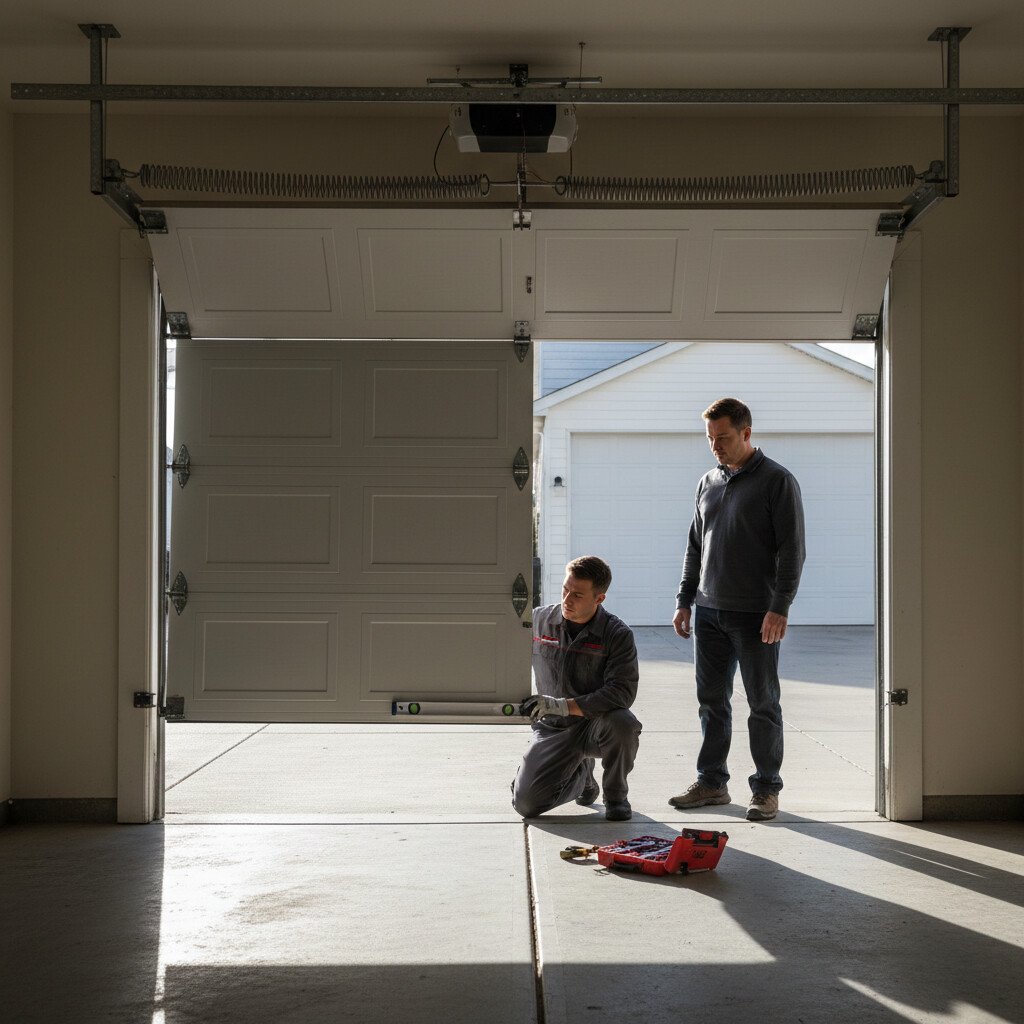
Once the door is mechanically secure and clamped, verify its balance and safety systems in a controlled sequence. Pull the release cord. Raise the door to mid‑travel and test balance; it should hold without drifting. If it falls or lifts, tension isn’t correct.
If your tests show inconsistent behavior—partial opening, sudden reversal, or stopping—it’s a sign you need deeper diagnosis beyond basic safety checks. Follow this diagnose a door that opens partway then stops walkthrough to pinpoint whether the trigger is sensors, force limits, or mechanical binding.
Reconnect the opener, then test auto reverse using a 2×4 laid flat under the door. Confirm reversal within two seconds of contact. Next, check photo eyes: align LEDs, clean lenses, and confirm the beam stops closure.
- Hand on rail, eyes on rollers
- Door at waist height, steady
- 2×4 centered on the floor
- LEDs solid, lenses clear
- Stopwatch ready for timing
If your door fails a balance test or behaves unpredictably during safety checks, that’s often an early indicator of deeper wear. Review these top warning symptoms that indicate a garage door repair is needed so you can confirm whether the issue is minor or urgent.
Stop When It’s Not Safe and Call a Professional
Your safety checks confirm what’s working; they should also tell you when to stop. If the door binds, drops, jerks, or the opener strains, disconnect power and step away.
Don’t touch torsion springs, cables, or bottom brackets—stored energy can instantly injure. Avoid common repair mistakes: loosening set screws, mixing cable routing, substituting mismatched springs, bypassing photo eyes, or forcing tracks.
Stop if you hear grinding, smell burning, see frayed cables, cracked drums, bent tracks, or a crooked door.
Use the manual release only with the door fully down. Document symptoms, secure the area, and request professional assistance with precise fault details.
When you decide to stop and call a pro, make sure it’s the right pro—not the first number that answers. This guide on how to choose the right garage door repair company for safe, reliable service helps you verify insurance, reviews, and estimate quality before work begins.
Conclusion
You’ve got this, but keep safety first. Disconnect power, lock out the opener, and secure the door fully open or closed. Wear eye, hand, and head protection. Use proper tools—winding bars, clamps, and rated hardware—and treat springs and cables as loaded. Work one side at a time, then test balance, auto‑reverse, and photo eyes. Remember: torsion springs store energy comparable to lifting 150–200 lb, so stop if anything feels off and call a pro immediately.