You call for a stuck door, a tech arrives in 30 minutes, then claims “failed springs, unsafe opener, urgent replacement” and quotes triple the market rate. You’re pressured to approve on the spot, with vague parts, no permit mention, and an “emergency fee” if you hesitate. This is how garage door repair scams start. You can avoid them with code-compliant checks, documented quotes, and verifiable credentials—if you know exactly what to ask before anyone touches the door.
Key Takeaways
- Beware of inflated trip fees, undisclosed “emergency” rates, and ads promising $29 or $0 callouts that hide expensive upsells.
- Refuse unnecessary parts and markups; demand part names, model numbers, prices, and warranties before authorizing work.
- Verify legitimacy: physical address, local phone, active contractor license, and current insurance certificates.
- Require a written estimate detailing scope, fixed pricing, warranty terms, and approval thresholds before any work starts.
- Walk away from high-pressure tactics; document everything, dispute charges, and report fraud if scammed.
Quick Steps If Your Garage Door Won’t Budge
Before troubleshooting, disconnect the opener from power and verify the area is clear of people and obstructions.
Check the manual release cord; pull straight down to disengage the trolley, then lift the door with two hands. If it’s heavy or uneven, stop—springs may be compromised.
Inspect photo-eyes for alignment and debris; clean lenses and confirm indicator LEDs are solid.
Test wall control and remote batteries. Verify tracks are unobstructed, fasteners are tight, and rollers are intact.
Lubricate hinges and rollers with garage-rated lubricant only.
Before you call anyone or approve emergency work, make sure you’ve handled the situation safely. Secure the door, avoid forcing movement, and keep clear of loaded parts. This garage door repair safety precautions guide covers the safest first actions to take before diagnostics or service.
Restore power and test. If issues persist, follow the manufacturer’s instructions for stuck-door solutions and keep emergency contacts readily available.
Some scammers exaggerate minor issues as a “critical failure,” pushing homeowners into unnecessary garage door repair emergency services.
How Garage Door Repair Scams Make Money
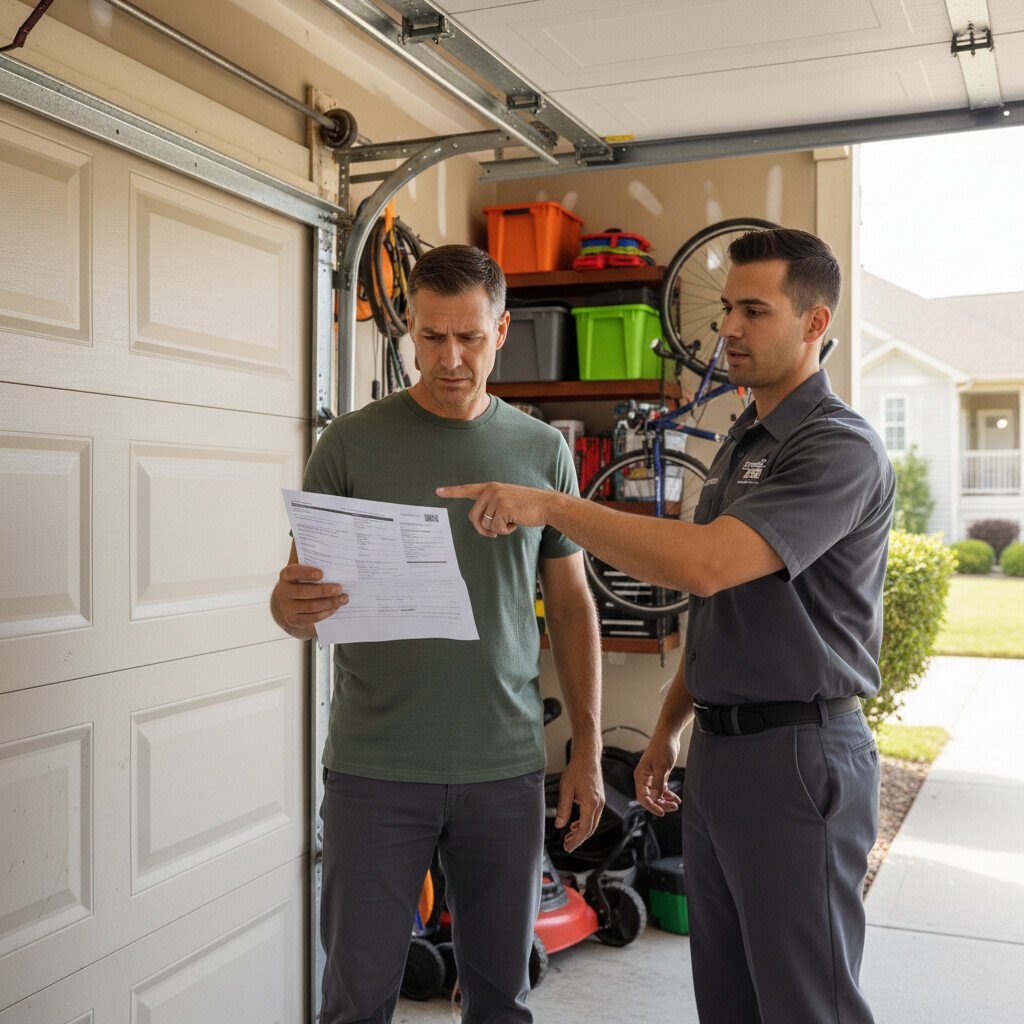
Once you’ve ruled out simple fixes and safety hazards, understand how bad actors monetize “repairs.”
Common tactics include inflated trip fees, quoting “emergency” rates without disclosure, and selling unnecessary parts—especially torsion springs, rollers, and openers—at 3–10x market cost.
They’ll claim code or UL 325 compliance requires replacements, then add bogus “balancing” or “calibration” line items. You’re pressured with time-limited quotes and vague warranties voided by “wear.”
They exploit fake reviews and social media to appear reputable, then pad invoices with disposal fees and fuel surcharges.
Some swap quality hardware for off-spec components, guaranteeing repeat failures and more charges.
A big reason scams work is homeowners don’t know what common repairs should cost, so inflated parts and vague labor charges sound “normal.” Use this garage door repair cost overview with typical fees and averages to benchmark quotes before approving work.
Red Flags in Ads and Websites
Watch for ads that quote unrealistically low service fees or “$0 callouts”—they often conceal noncompliant upsells and unsafe shortcuts.
Verify credentials: You should see a legal business name, license numbers, insurance coverage, and manufacturer authorizations clearly listed and verifiable.
If the site is vague or omits this data, treat it as a hazard and don’t authorize work.
Too-Good-To-Be-True Pricing
Few red flags are clearer than ads promising garage door repairs for “$29” or “half off today only.”
Ultra-low teaser prices often exclude parts, trip fees, fuel surcharges, and “shop supplies,” leading to inflated on-site invoices and pressure to authorize non-code-compliant fixes.
You need pricing transparency before anyone rolls a truck. Ask for line-item quotes that specify parts, labor rates, and code-required adjustments.
- Verify what’s included: springs, cables, bearings, safety sensors, and disposal.
- Confirm diagnostic fees, minimum labor blocks, after-hours premiums, and taxes.
- Demand written approvals before extra work.
These steps prevent discount pitfalls, reduce upsell risk, and keep repairs compliant and safe.
Vague or Missing Credentials
Paper trails matter. If an ad hides a license number, insurance carrier, or physical address, treat it as a fault condition. Demand credential verification before any site visit. Confirm a current contractor license with your state database, match business names and phone numbers, and verify liability and workers’ compensation certificates directly with insurers.
Check manufacturer certifications for specific openers and torsion systems.
Practice strict scam awareness: avoid PO boxes as the only address, disposable emails, or stock photos with mismatched branding. Require written estimates with part numbers and warranty terms.
If credentials are vague or missing, lock out access and select a compliant provider.
How to Verify a Garage Door Repair Company
Before you schedule any work, verify the company’s legitimacy with objective checks: confirm a physical business address (not just a P.O. box), a local phone number, and a current state or municipal contractor license where required.
Check insurance certificates naming general liability and workers’ compensation, and verify with the issuer. Read customer reviews from multiple platforms, looking for consistent patterns and recent activity. Confirm service guarantees align with code-compliant practices and manufacturer specifications.
- Validate license numbers against state or municipal databases and note expiration dates.
- Confirm technician training: DASMA, manufacturer, or OSHA credentials.
- Match branded trucks, uniforms, and invoices to the registered business name.
If you want a more complete vetting process beyond quick checks, use this guide on how to evaluate a garage door repair company before you hire them so you can confirm licensing/insurance, review patterns in complaints, and compare quotes without falling for pressure tactics.
Quotes and Warranties: Get It in Writing
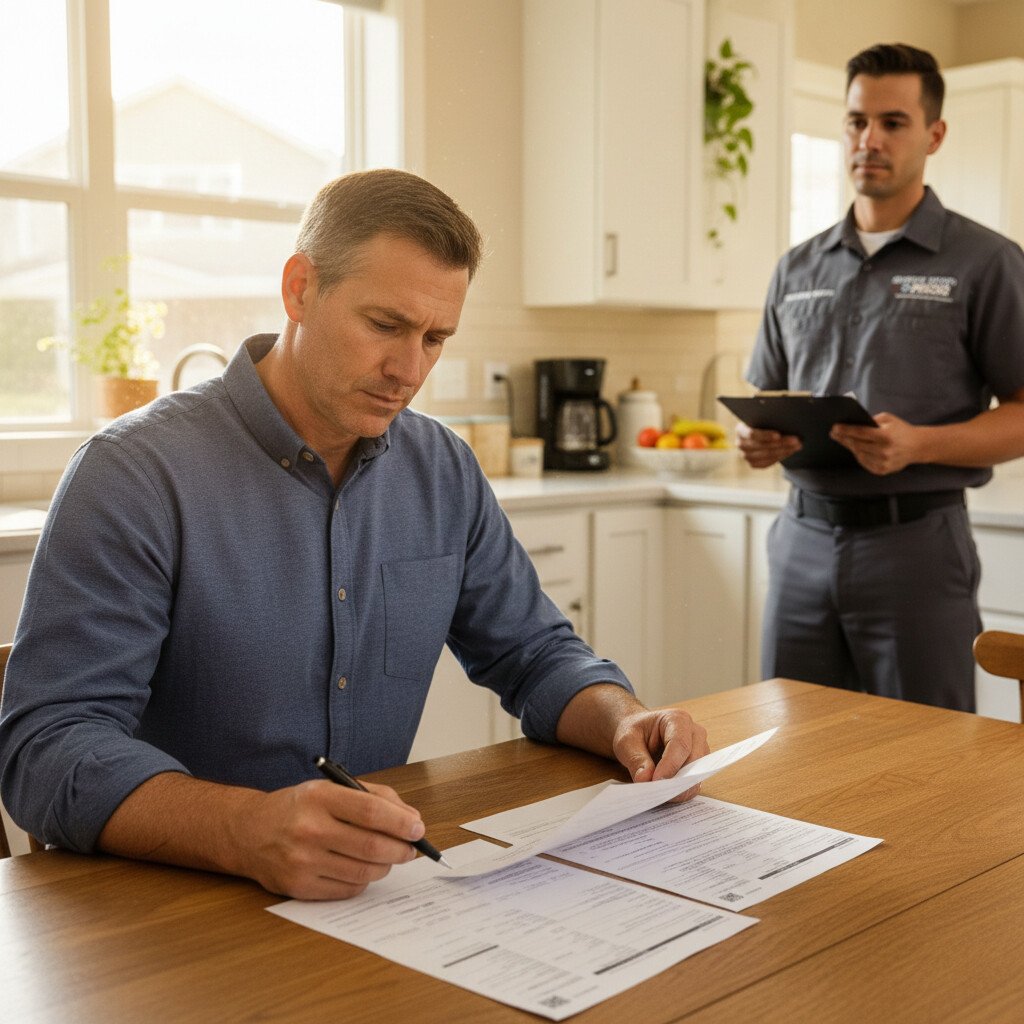
Insist on a written scope that lists parts, labor, model numbers, and a fixed price before any work starts.
Require clear warranty terms in writing, including coverage (parts/labor), exclusions, service response time, and transferability.
If the contractor won’t document these items, treat it as a safety and code-compliance red flag.
A smart way to avoid bad service is knowing what you can safely handle yourself versus what should be handled by a qualified pro—with clear warranty terms either way. This guide comparing DIY and professional garage door repair options helps you decide confidently and avoid rushed, high-pressure repairs.
Written Scope And Price
Even if the technician seems trustworthy, you protect yourself by demanding a written scope of work, itemized pricing, and warranty terms before authorizing any repair.
Require model numbers, quantities, labor hours, disposal fees, and any permit charges. Insist on pricing transparency and a signed, time-stamped estimate compliant with local codes and UL-listed parts.
- Verify the written scope matches diagnosed faults (springs, cables, rollers, opener logic board). Reject vague phrases like “system overhaul.”
- Require line-item unit costs, labor rate, trip charge, taxes, and contingencies. Prohibit unauthorized add-ons.
- Set thresholds: any variance over 10% requires your prior written approval. Keep copies for records.
Clear Warranty Terms
Although a quote may look complete, you still need explicit warranty terms in writing that specify coverage, duration, and exclusions for both parts and labor. Demand warranty specifics aligned with manufacturer instructions and UL 325 safety requirements. Verify what failures are covered, response times, and who pays for diagnostics. Insist the warranty duration matches the stated service life and code-compliant installation.
| Item | Required Detail | Why It Matters |
|---|---|---|
| Parts | Model/serial coverage | Prevents denial |
| Labor | On-site hours/limits | Controls costs |
| Duration | Start/end dates | Stops shrinkage |
| Exclusions | Wear/misuse lists | Avoids loopholes |
| Transfer | Owner/house link | Preserves value |
Keep signatures, license numbers, and claim procedures.
Bait-and-Switch Pricing: How It Works
When a garage door company uses bait-and-switch pricing, they lure you with an ultra-low “service call” or “spring replacement” quote.
Beware ultra-low garage door quotes—bait-and-switch tactics often spike costs onsite.
Then, they escalate costs onsite by claiming code, safety, or parts “upgrades” are mandatory. You’re pressured to approve inflated add-ons, a hallmark of bait and switch tactics and deceptive pricing.
Verify requirements against manufacturer manuals and current UL 325 and DASMA standards. Ask for written line-item pricing before any work.
- Demand model numbers, torque specs, and spring cycle ratings; compare to your door’s weight.
- Require a signed, fixed quote; reject open-ended “diagnostic” fees.
- Confirm disposal, travel, and tax in writing.
Fake “Emergency” and After-Hours Fees
You may face inflated after-hours surcharges that far exceed industry norms or the company’s posted schedule.
Some techs push phony “emergency” diagnoses to justify immediate work and premium rates, even when the door is safe to secure and service during normal hours.
Verify fees in writing, request a code-compliant safety assessment, and authorize only work that addresses an actual hazard.
Scammers often win when homeowners can’t clearly explain what’s happening with their door and agree to “emergency” work blindly. Knowing the most common indicators your garage door needs immediate repair helps you describe symptoms accurately and avoid paying for unnecessary replacements.
Inflated After-Hours Surcharges
Even outside normal business hours, legitimate garage door service calls don’t justify arbitrary “emergency” multipliers or vague after-hours surcharges.
You should expect transparent emergency pricing that reflects actual labor, travel, and parts—not padding or hidden fees. Require a written rate sheet before dispatch and confirm whether the fee is flat or per-hour.
- Verify scope: the surcharge must cover arrival only; diagnostic and repair labor should be itemized separately per code-compliant practice.
- Demand parts pricing: list manufacturer, model, and warranty; no bundled markups.
- Confirm timing: document start/stop times; round to nearest 15 minutes, not “after-hours blocks.”
Phony Emergency Diagnoses
Although a jammed door can feel urgent, scammers exploit stress by labeling routine issues as “emergencies” to justify inflated callouts and after-hours fees. Verify before you pay.
Disconnect the opener and use the manual release; if the door balances at mid-travel, it’s rarely a crisis. Document symptoms, circuit status, and spring condition.
Demand written diagnostics, part numbers, labor rates, and time stamps. Reject phony technician claims like “imminent cable snap” without evidence. Ask for photos of wear, force readings, and safety-reversal tests per UL 325.
Compare quotes to standard schedules to prevent exaggerated repair costs. If unsafe, secure the opening and wait for daylight.
Common Upsells You Don’t Need
While a failed spring or misaligned safety sensor warrants real repair, many technicians push add-ons that don’t meet code, extend service life, or improve safety.
You can spot upsell tactics by asking for manufacturer specs, UL 325 references, and part numbers. Decline unnecessary services that don’t address measured faults or code gaps.
- “Lifetime” rollers and cables: Standard sealed-bearing rollers rated for your door weight suffice. Replace only when worn, not by calendar.
- Extra opener horsepower: A balanced door needs proper counterbalance, not a stronger motor.
- Complete hardware “kits”: Swap only failed hinges, brackets, or fasteners; torque-check and lubricate instead of blanket replacement.
Upsells work best when homeowners don’t know the normal pricing for common problems like rollers, sensors, tracks, or cables. Use this guide on standard pricing by garage door repair issue to compare what you’re being told against realistic cost ranges before approving extra work.
High-Pressure Tactics and How to Say No
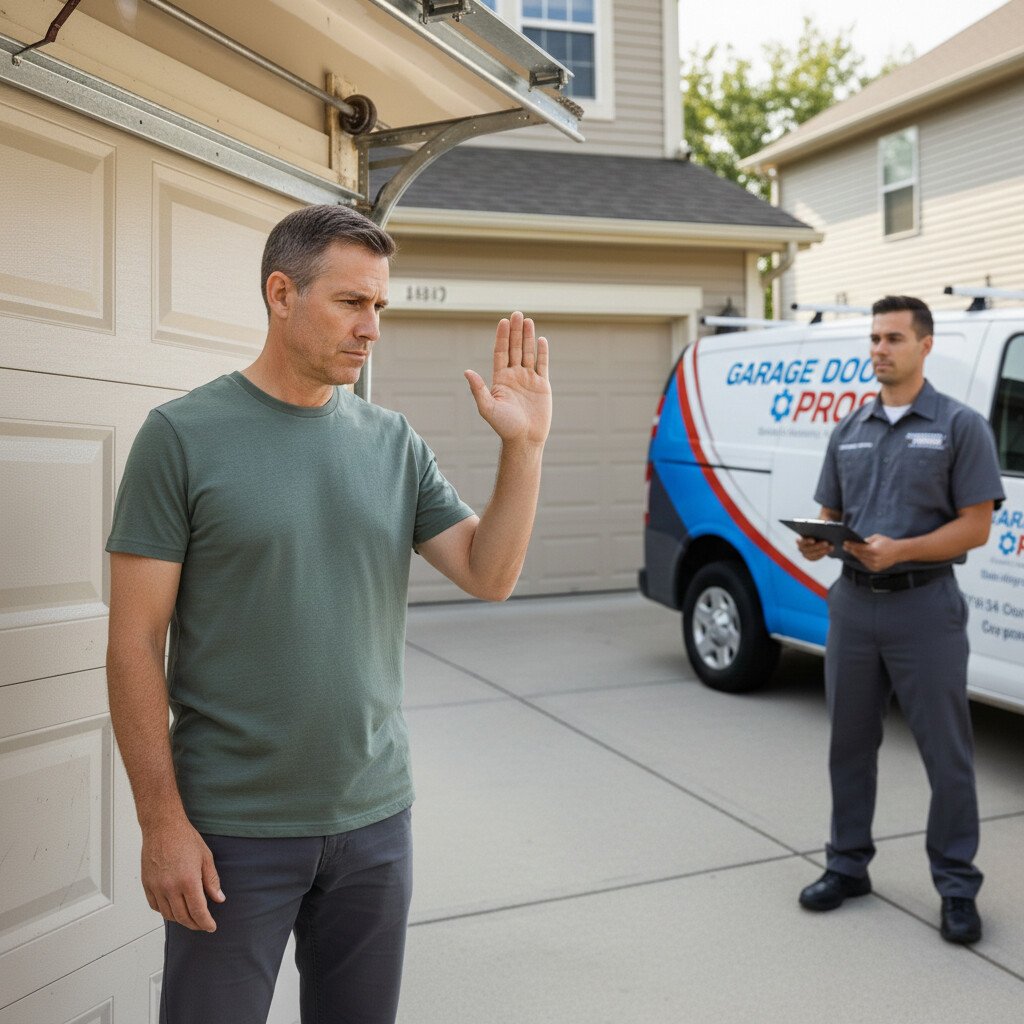
Because scams often hinge on urgency, you’ll recognize high-pressure tactics when a tech insists on “today-only” pricing, claims your door is “unsafe to operate,” or refuses to leave without a signature.
High-pressure sales ignore inspection protocols, written estimates, and parts identification. You should require model numbers, torque specs, and a line-item quote.
Verify failures: ask to see worn cables, fractured springs, or noncompliant openers per UL 325.
Use assertive responses: “I won’t authorize work without a written estimate and my approval.”
Decline deposits, rush fees, or bundled “safety packages.” Demand your old parts.
If they escalate, end the visit and choose a vetted contractor.
What to Do After a Scam (and Report It)
If a tech ignored your refusal and you paid or signed anyway, move immediately to containment and documentation.
Isolate the opener’s power, secure the door, and photograph parts, receipts, and the technician’s ID. Save emails, caller IDs, and vehicle plates. Your scam recovery starts with facts, timestamps, and serial numbers.
Isolate power, secure the door, document everything—photos, receipts, IDs, timestamps, and serial numbers.
- Contact your bank or card issuer, dispute the charge, and place a fraud alert. Request a written block on recurring payments.
- File complaints: FTC, state attorney general, local consumer protection, BBB. Include all evidence.
- Notify your building department if unsafe work violates code; request inspection and a corrective, code-compliant repair estimate.
Conclusion
You’ve got the tools to stay safe and code-compliant. Slow down, verify licenses and insurance, get written estimates and warranties, and refuse vague pricing or pressure. One stat to remember: the FTC estimates Americans lose billions to repair scams annually—don’t add to it. Demand model-specific parts, UL-listed components, and manufacturer-approved procedures. Document everything, photograph parts, and keep invoices. If you’re targeted, stop work, pay only for verified labor, and report it to your state licensing board and the FTC.