Deciding between repairing and replacing your garage door track starts with safety and diagnostics. You’ll check for bends, loose fasteners, misalignment, and early corrosion, then compare that to cracks, twisted rails, severe rust, or repeated derailments. Factor in door age, spring condition, opener force, and track gauge. Weigh repair costs against replacement, including downtime and compliance with manufacturer specs. If the door binds or rubs under load, stop—your next step depends on what you find next.
Key Takeaways
- Replace if there are major bends, kinks, elongated holes, cracked brackets, or rust pitting that compromise integrity or cause recurring derailments.
- Repair minor, localized dents or slight misalignments if rollers run smoothly and fasteners hold; recalibrate and lubricate after adjustments.
- Consider age and wear: tracks nearing 10–15 years with thinning walls, coating loss, or hole creep are better replaced.
- Compare costs and downtime: small repairs under 2 hours; full replacement 2–4 hours but restores factory tolerances and safety margins.
- Follow safety and specs: if auto-reverse, photo-eyes, or fastener grip fail, or manufacturer limits are exceeded, choose replacement.
Safety First: Before You Touch the Garage Door Track
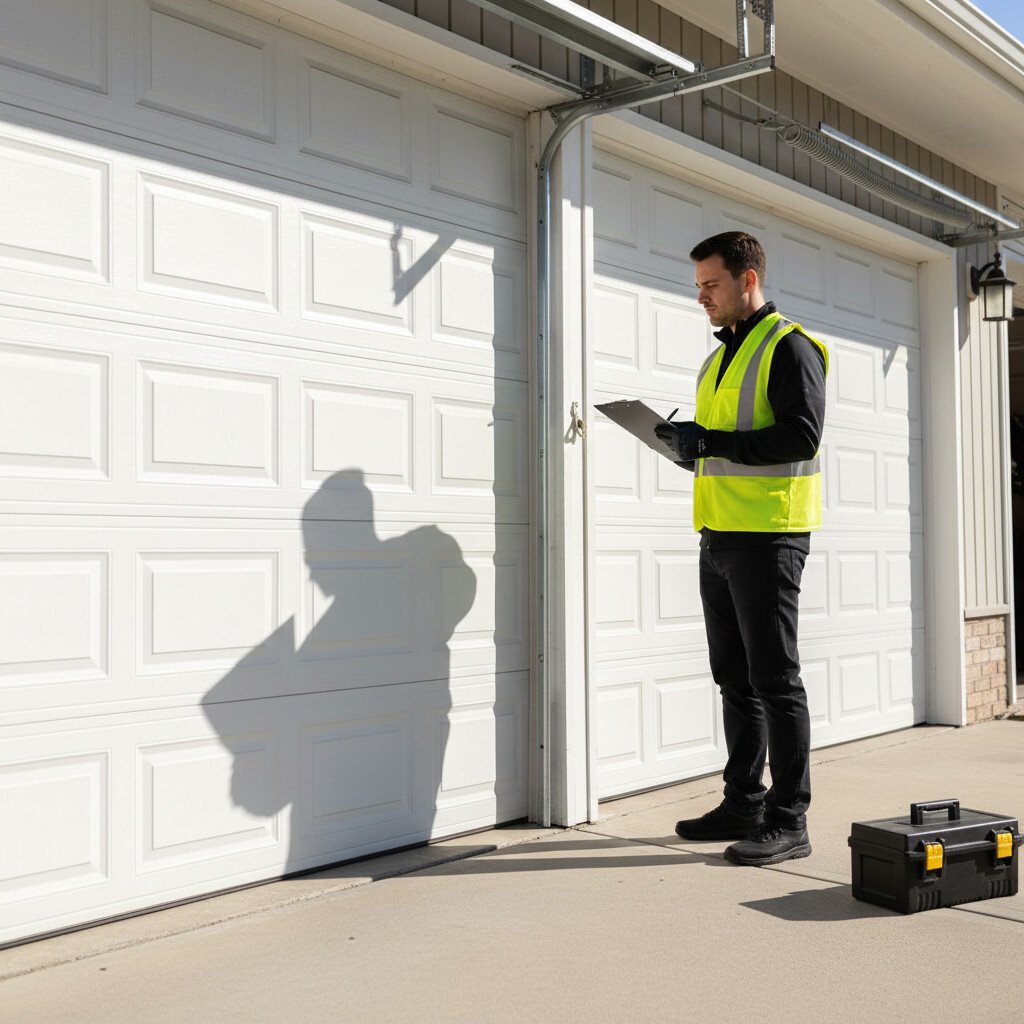
Before anything else, confirm the door is fully closed and disconnected from power.
Before anything else, confirm the door is fully closed and disconnected from power.
Pull the opener’s release cord, then lock the door in the down position with clamps on both tracks.
Wear safety glasses and cut‑resistant gloves.
For garage door safety, stand clear of springs, cables, and bottom brackets; they’re tensioned components.
Inspect track alignment, fasteners, and brackets using a flashlight and straightedge.
Listen for grinding; note dents, rust, or loose anchors.
Verify vertical and horizontal tracks are plumb and parallel.
Check roller stems for play and frayed lift cables near the drum.
For track maintenance, torque-check lag screws and document findings.
Tracks look harmless, but bending force, pinch points, and a heavy door can create real hazards fast. Read the hidden dangers of DIY garage door repairs so you can recognize when track work is beyond safe DIY.
Repair or Replace? A Quick Decision Checklist
Start by assessing age and wear: note corrosion, elongation of bolt holes, and alignment drift that indicate fatigue.
Next, grade damage severity—identify kinks, twists, cracked brackets, or bent sections that won’t hold tolerance after straightening.
Finally, compare repair cost to replacement while prioritizing safety; if structural integrity or reliable travel can’t be verified, choose replacement.
Once you decide repair vs replace, the next step is understanding the cost categories that drive the final bill—service call, labor time, and parts. This garage door repair costs overview for comparing options gives a clearer baseline before you commit.
Age And Wear
Two quick checks help you gauge age and wear: quantify the track’s service life and inspect critical wear points.
First, compare the installation date to the expected garage door’s longevity: light-duty residential tracks often last 10–15 years with annual maintenance; high-cycle systems vary by usage.
Next, assess wear indicators: elongation of fastener holes, rail wall thinning, flaking zinc, groove polishing where rollers ride, misaligned brackets, and recurring roller chatter.
Measure track thickness with calipers and check straightness with a long level.
If wear is localized and within tolerance, plan repair. If thinning, hole creep, or coating loss is widespread, schedule replacement.
Damage Severity
With age and wear quantified, translate findings into action by grading the damage itself. Inspect track straightness, fastener integrity, and alignment tolerance. Distinguish superficial flaws from structural deformation. Use a straightedge and feeler gauge; measure deviations, not guesses. Prioritize immediate stabilization if movement binds.
- Minor dents: shallow, non-creasing marks; door runs true; consider reshaping.
- Major bends: creases or kinks; rollers climb or jam; replacement is prudent.
- Elongated screw holes or loose brackets indicate rail instability—replace sections.
- Rust pitting that thins metal compromises the load path—replace.
- Repeated roller derailments after adjustment signal track geometry failure—replace.
Cost And Safety
Although budget pressures matter, let safety drive your call: weigh the price of parts and labor against the risk of door drop, bind, or derailment.
Perform a quick cost analysis: compare the cost of track, brackets, fasteners, and alignment time with the cost of a full track replacement and recalibration. If rollers, cables, or spring loads exceed rated tolerances, replacement is safer.
Check safety regulations and manufacturer specs: bent, cracked, or out-of-plumb tracks beyond service limits warrant replacement.
Replace if corrosion compromises fastener grip or concrete anchors. Repair only when deformation is minor and alignment holds through full travel.
Test auto-reverse force and photo-eyes; failures override budget—replace immediately.
While some homeowners look for cheap garage repair options, it’s important to ensure the fix doesn’t compromise structural stability.
Signs Your Garage Door Track Can Be Repaired
Sometimes a misaligned or slightly bent track doesn’t warrant a full replacement—provided specific criteria are met. You’ll determine repairability by verifying safe operation, structural integrity, and precise track alignment.
Use lockout/tagout before any checks, then assess measurable conditions and tolerances.
- Minor bends that cold-form back without kinking; fasteners and brackets remain tight.
- Rollers track smoothly with no binding, flat spots, or axle wobble; bearings intact.
- Localized surface corrosion passes rust inspection; no pitting compromising thickness.
- Mounting points are plumb and square; track alignment is correct after adjustment.
- Audible noise decreases after lubrication and fastener torqueing; door stays balanced during manual lift.
When to Replace the Garage Door Track Instead
Even after careful adjustments and lubrication, certain defects mean you should replace the track to restore safe operation and code compliance.
Replace the track if it’s kinked, creased, or cracked, since deformed steel loses alignment integrity.
Swap corroded sections where pitting undermines roller guidance.
Replace when bolt holes are elongated, bracing is loose, or mounting angles are distorted by impact.
Upgrade if the track material doesn’t match the door weight or spring type.
Replace mismatched radii or nonstandard installation methods that cause binding.
Replace if rollers derail under load, seams separate, or the vertical/horizontal plane can’t be squared within manufacturer’s tolerances.
Garage Door Track Repair vs. Replacement: Costs, Downtime, Lifespan
While both options can restore smooth door travel, repair and replacement differ sharply in cost, downtime, and service life.
Repair and replacement both restore smooth travel, but diverge in cost, downtime, and service life.
You’ll weigh repair costs against the advantages of replacement by assessing damage severity, alignment integrity, and hardware compatibility. Minor bends and loose fasteners favor repair; fractures, corrosion, or misaligned mounting planes justify replacement.
- Repair costs are typically lower but increase with bracket damage or specialty track profiles.
- Downtime: repairs often under 2 hours; replacements 2–4 hours with releveling.
- Safety margin: replacements reset tolerances; repairs demand strict recalibration.
- Lifespan: repair restores function; replacement provides full-cycle longevity.
- Total value: consider noise, wear patterns, opener load, and warranty delta.
Next Steps After Your Decision: DIY Repairs, Pro Help, and Prevention Tips
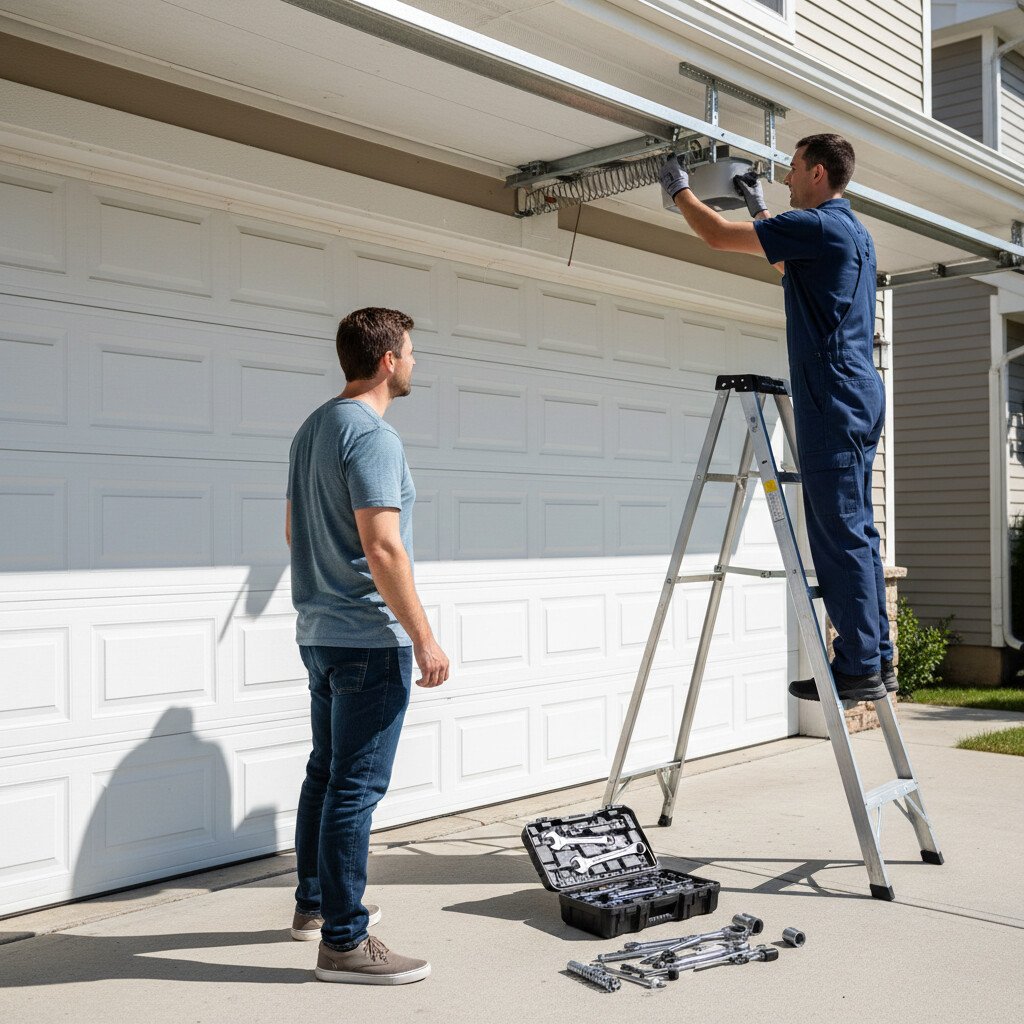
Now that you’ve chosen repair or replacement, start with a safe DIY checklist: disconnect power, lock the door in the down position, use rated supports, verify track plumb/level, and tighten or replace fasteners to spec.
Stop DIY and call a pro if you see bent tracks near lift points, frayed cables, torsion spring issues, severe misalignment, or any binding that trips force sensors.
Document serial numbers, track gauge, and hardware condition so a technician can confirm parts and load ratings.
After you decide repair vs replace, the next step is choosing who should do it—minor adjustments may be DIY-friendly, but structural track issues often aren’t. This DIY vs professional garage door repair checklist helps you decide based on damage level, tools needed, and safety risk.
Safe DIY Checklist
Before you pick up a wrench, anchor your plan: confirm the door is fully closed, disconnect power to the opener, and engage the manual release to isolate the door.
Prioritize tool safety and put on protective gear: ANSI-rated glasses, cut-resistant gloves, and steel-toe footwear.
Work methodically, document baseline conditions, and verify each fastener’s torque.
- Inspect tracks for kinks, oval holes, and loose brackets; measure plumb and parallelism.
- Check rollers: diameter, tread wear, bearing play, and stem straightness.
- Verify spring containment; don’t adjust tensioning hardware.
- Torque-track bolts evenly; use threadlocker where specified.
- Test balance manually; confirm smooth, symmetric travel.
When To Call Pros
If diagnostics point to structural damage, spring or cable issues, or persistent misalignment after basic corrections, stop and call a qualified technician. High-tension components can fail catastrophically; don’t test them.
Call pros when: rollers repeatedly jump, tracks are kinked or cracked, fasteners won’t hold, the opener strains, or the door binds despite correct alignment, lubrication, and balance.
Request a professional assessment with load calculations, track-gauge verification, and fastener substrate checks. Ask for expert recommendations comparing reinforcement, sectional replacement, or full track swap. Confirm parts compatibility with your door weight, radius, and cycle rating.
Schedule routine inspections and retorque hardware seasonally.
Conclusion
In the end, treat your garage door track like a critical conveyor—if it’s slightly out of alignment, tune it; if it’s cracked, corroded, or unsafe, replace it. Use the checklist, document wear, and compare costs, downtime, and lifespan. Prioritize safety, compatibility, and code compliance. If you DIY, follow torque specs and lockout procedures; otherwise, call a pro. Schedule routine inspections, lubricate properly, and tighten hardware to keep the system reliable, quiet, and safe over the long haul.