Is the noise and vibration coming from loose hardware, dry rollers, or a misaligned track? You can quiet most doors by tightening carriage bolts and hinge screws, lubricating rollers, hinges, and springs with silicone or lithium grease, and confirming the door stays put at mid-height. Check track alignment and opener mounting, then assess worn nylon rollers or cracked weatherstrip. If the opener hums, a belt drive and anti-vibration pads help—yet one safety step often gets ignored that could save you a repair.
Key Takeaways
- Power down the opener, release the door, and identify noise sources by manually lifting and listening for grinding, rattling, squealing, or thumping.
- Tighten all hardware—hinges, carriage bolts, lag screws, and track fasteners—and use blue threadlocker on frequently loosening screws.
- Lubricate rollers, hinges, and springs with silicone (nylon) or white lithium (metal); avoid WD‑40 and cycle the door to distribute.
- Check door balance and track alignment; ensure tracks are plumb with 1/4-inch roller clearance and the door holds at halfway.
- Replace worn rollers, loose hinges, and cracked weatherstrips; clean tracks and re-torque fasteners to reduce vibration and noise.
- When unusual noises suddenly appear, scheduling a same-day garage door repair helps avoid additional wear on the system.
Diagnose Garage Door Noise and Quick Safety Checks
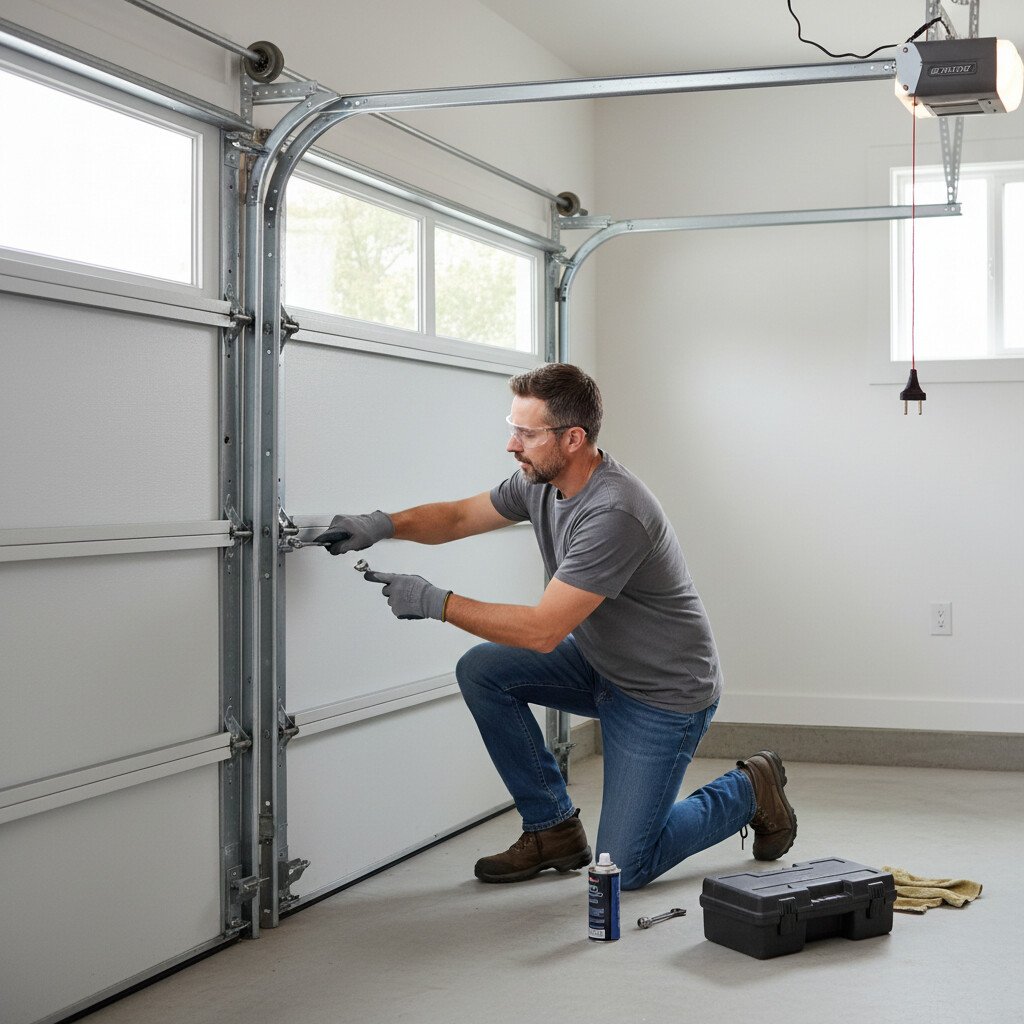
Before you chase parts or tools, power down the opener, pull the emergency release, and operate the door by hand to isolate the noise source.
Listen to tracks, hinges, rollers, springs, and panels. Note whether the sound is grinding, squealing, rattling, thumping, or clicking.
Compare garage door types: sectional, tilt-up, and roll-up exhibit different noise sources and travel paths.
Inspect rollers for flat spots, bearings for play, tracks for misalignment, and springs for coil rub.
Check panel joints and weatherstrip drag.
Test balance: lift halfway; it should hold.
Restore power, run the opener, and distinguish motor, drive, or header vibration.
Noise is often the first clue that friction, misalignment, or worn hardware is building up in the system. This guide on spotting early garage door wear-and-tear signs before parts fail helps you match common sounds to the exact components that need inspection or repair.
Tighten Loose Hardware to Cut Garage Door Noise
Start with a methodical fastener check: use a nut driver and socket set to snug all carriage bolts, lag screws, and hinge screws on panels, end/center brackets, track mounts, and opener header/angle irons.
Perform a systematic hardware inspection from the bottom panel upward, then along the vertical and horizontal tracks. Hold carriage-bolt heads with a wrench while tightening nuts to avoid panel damage.
Verify track fasteners bite into framing; replace stripped lag screws with longer, larger-diameter lags. Confirm hinge leaves sit flush; replace bent hardware. Use blue threadlocker on recurring offenders.
Apply consistent tightening techniques: firm, not crushing. Recheck the balance and test-cycle quietly.
Loose hardware is often a symptom of gradual wear across the whole door system, not just a noise issue. For a bigger-picture plan that prevents the same problems from coming back, use these smart fixes to extend garage door lifespan and keep parts from loosening prematurely.
Lubricate Rollers, Hinges, and Springs (Silicone/Lithium)
To quiet friction points, choose a garage-safe lubricant: silicone spray for nylon rollers and tracks, white lithium for metal hinges and springs.
Power off the opener, clamp the door, then apply light, targeted coats to rollers, hinge pins, and spring coils while shielding surfaces and wiping excess.
Work each joint through a few open/close cycles to distribute lubricant and verify noise reduction.
If your door is squeaking or vibrating, a lack of lubrication and rising friction may be forcing the springs to work harder every cycle. Following a proper routine to prevent garage door spring breaking failure can reduce metal-on-metal wear, improve smooth operation, and extend spring lifespan.
Choose Proper Lubricant
Although noise can stem from misalignment, you’ll quiet most garage doors by choosing the right lubricant and applying it correctly.
Select lubricant types designed for garage hardware: silicone spray for nylon rollers and weatherstripping, and white lithium grease for steel hinges, metal rollers, and torsion/extension springs.
Avoid WD‑40 and penetrating oils; they clean but don’t lubricate. Prioritize non-drip, temperature-stable formulas.
Match viscosity to part speed: lighter for rollers, medium for hinges, slightly heavier for springs.
Use straw nozzles or brush-on gels to control placement—these application techniques reduce overspray and waste.
Choose products labeled non-gumming and corrosion-inhibiting for longer, quieter operation.
Apply Correctly And Safely
With the right lubricant selected, apply it methodically to stop chatter and vibration while protecting components. Disconnect power, clamp the door open, and wear eye protection—these safety precautions prevent injuries.
Use proper tools: silicone spray for nylon rollers and hinges; white lithium for steel bearings and torsion spring coils. Wipe tracks clean; don’t lube tracks.
- Lightly mist roller bearings; rotate wheels to distribute lubricant evenly.
- Apply a small burst to hinge pins and knuckles; flex the door to work it in.
- Coat spring coils sparingly; run the door to reduce squeal and resonance.
Avoid overspray. Wipe excess to prevent dust buildup.
Check Door Balance and Align Tracks
Before chasing motor or roller issues, verify the door is balanced and the tracks are true. Pull the opener release. Lift the door halfway; it should hover. If it drops or rises, spring tension is off—don’t adjust springs yourself; call a pro.
Next, inspect door alignment: gaps at jambs or uneven panel spacing indicate skew. Check vertical and horizontal tracks for plumb and level. Loosen mounting bolts slightly, perform precise track adjustment, then retighten.
Ensure 1/4-inch clearance between rollers and track. Confirm brackets are tight and shims are secure. Finally, test manual travel—smooth, centered motion means reduced noise and vibration.
If you keep hearing grinding or feel vibration even after basic alignment tweaks, the track may be deformed or be creating uneven roller pressure. Review when a noisy track can be repaired versus when replacement is the safer option to prevent derailment and recurring noise.
Replace Worn Rollers, Hinges, and Weatherstrip
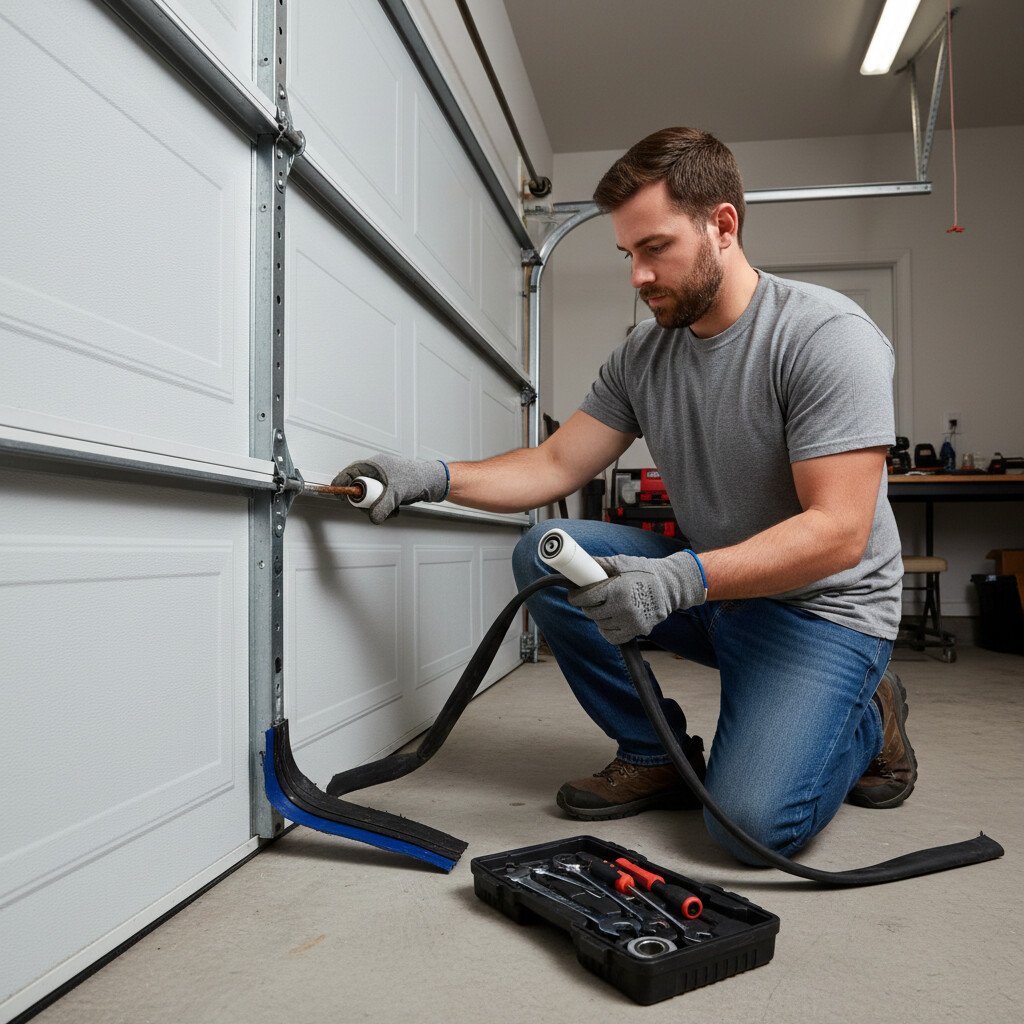
Noisy operation often flags worn rollers, loose hinges, or cracked weatherstrip—look for flat-spotted nylon wheels, wobbly hinge knuckles, metal shavings, and brittle or gapped seals.
Shut off power, clamp the door, then replace rollers and hinges one section at a time; torque fasteners to spec and lubricate bearings with garage-door rated grease.
Finish by removing the old bottom and side seals, cleaning the tracks, and install matching weatherstrip with a continuous, even seal.
Noise fixes work best when the replacement parts match the door’s build—roller type, hinge gauge, and even stem length can change how the door rides the track. This guide to selecting the right rollers, hinges, and other garage door parts for DIY repair helps you buy parts that actually solve the vibration instead of creating new friction.
Signs Of Worn Parts
Often, garage door noise traces back to worn components you can spot with a quick inspection. Watch and listen as the door cycles. Look for vibration, scraping, and side-to-side play. Focus on rollers, hinges, weatherstrips, and adjacent hardware that amplify resonance from worn springs and noisy bearings.
- Rollers: Flat spots, cracked nylon, or wobbly shafts indicate wear. Spin by hand; gritty feel or wobble equals replacement.
- Hinges: Elongated holes, cracked knuckles, or loose pins create clatter and misalignment. Check for lateral slop.
- Weatherstrip: Torn lips, hardened rubber, or gaps transmit vibration. Inspect for daylight, brittleness, and inconsistent sealing pressure.
Proper Replacement Steps
You’ve identified worn parts; now replace them methodically to cut noise and vibration. Disconnect power, clamp the door to prevent movement, and gather proper tools: socket set, punch, locking pliers, silicone lube, and weatherstrip.
Replace rollers first; remove hinge bolts, slide out the axle, install sealed nylon rollers, then torque bolts evenly. Inspect hinges; swap cracked or bent units, aligning joints to avoid binding. Confirm track clearance and fastener tightness.
Replace bottom and side weatherstrip; clean channels, press in new vinyl, trim flush, ensure uniform seal. Note replacement frequency: rollers 5–7 years, hinges 7–10, weatherstrip 3–5. Test balance and travel.
Reduce Opener Noise With Belts, Pads, and Settings
While the door and track transmit plenty of sound, the opener itself often amplifies it. For fast noise reduction, replace a chain with a belt drive; it’s lighter, dampens shock, and runs quietly.
Swap the chain for a belt drive—lighter, shock-damping, and far quieter.
Next, isolate vibration at the mount points and adjust control parameters that cause chatter.
- Install anti-vibration pads between the opener feet and the ceiling framing; snug, don’t crush. Add rubber isolators to angle-iron hangers.
- Tension the belt to spec: deflection about 1/4 inch mid-span. Recheck after 50 cycles.
- Program soft-start/soft-stop, reduce travel force to the minimum reliable level, and fine-tune up/down limits to prevent binding at end stops.
Opener noise can spike in cold weather when grease thickens and friction increases, or in high humidity when components start dragging. This cold-weather and humidity garage door repair guide helps you tell whether the opener is the issue—or weather is causing resistance elsewhere.
Conclusion
You’ve tuned your door like a well-oiled machine: diagnose noises, tighten hardware, lubricate moving parts, balance the door, align tracks, and swap worn rollers and weatherstrips. Reduce opener rumble with belt drives, isolation pads, and dialed-in settings. Listen after each step and recheck fasteners monthly. If the door won’t stay halfway, or springs/cables look damaged, stop and call a pro. Do this, and your garage door will hum, not howl—quiet, efficient, and safe for the long haul.