Material choice, climate exposure, and installation accuracy shape lifespan; usage frequency, maintenance rigor, and hardware quality seal the outcome. You’ll see steel resist impacts better than aluminum, but moisture, UV, and temperature swings still drive corrosion and warping. Cycle ratings matter if you open the door many times daily. Misalignment strains springs, rollers, and cables, while poor lubrication accelerates wear. Opener type, door balance, and insulation efficiency further shift durability—so your next decision could save years.
Key Takeaways
- Material and build quality determine durability; thicker steel, protective coatings, robust hinges, and sealed bottom astragals resist wear and corrosion.
- Climate exposure accelerates degradation; moisture, salt air, UV, and temperature swings corrode metal, fade finishes, and weaken seals.
- Usage frequency drives component wear; match spring cycle ratings and opener duty to daily operations to prevent premature failure.
- Precise installation and alignment reduce stress; level tracks, plumb verticals, and correct torsion shaft centerline ensure smooth, balanced movement.
- Proactive maintenance extends life; regularly lubricate, tighten, test safety systems, inspect springs/cables, and replace worn weatherstripping.
Material and Build Quality
Material determines strength, corrosion resistance, and maintenance. Steel (≤24 gauge) is strong and dent-resistant; aluminum is lighter but dents easily; fibreglass resists warping; composite balances stiffness and looks; hardwood is rigid but needs sealing.
Check coatings, galvanisation, polyester/PVDF paints, or powder coat—to prevent corrosion.
Choose double-skin, foam-injected panels (≥1.75 in) with hemmed edges and continuous end caps. Use through-bolt hardware, stainless or zinc fasteners, heavy-duty hinges (No. 2+), and full-length sealed bottom astragals with aluminium retainers.
Choosing durable garage door installation materials is one of the biggest predictors of how long your door will last after installation.
Climate and Environmental Exposure
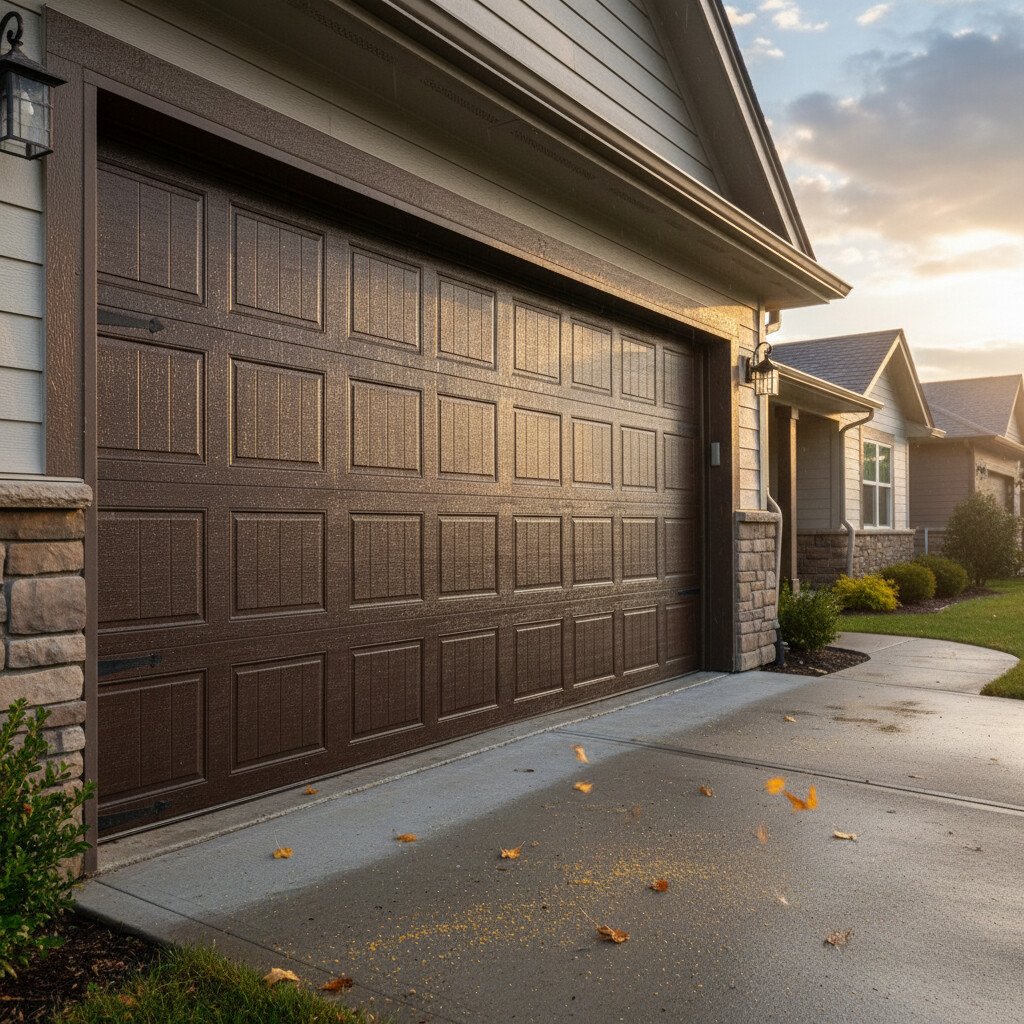
You face two primary environmental stressors: moisture that drives corrosion and swelling, and UV exposure with temperature swings that embrittle finishes and degrade seals.
In coastal or high-humidity zones, airborne salts accelerate rust on steel components and pit hardware.
In high-sun or wide seasonal ranges, UV breaks down paint and vinyl, while thermal cycling loosens fasteners, warps panels, and fatigues springs.
In humid or wet conditions, energy efficiency starts with proper garage door installation because tight sealing also reduces moisture intrusion that accelerates corrosion.
Moisture and Corrosion
Even when finishes look intact, moisture drives galvanic and uniform corrosion that shortens a garage door’s service life. Salt-laden air, wet slabs, and poor ventilation accelerate moisture accumulation in seams, fastener heads, and bottom rails. You’ll see blistering coatings, red rust on steel, white oxidation on aluminium, and seized rollers or hinges as tolerances tighten.
| Exposure Source | Impact on Components |
|---|---|
| Coastal spray | Wicks into the bottom seal, rusts tracks and brackets |
| Wet concrete | Wicks into bottom seal, rusts tracks and brackets |
| Condensation | Attacks inner panels, springs, and cable drums |
Prioritize corrosion prevention: specify G90+ galvanized or stainless hardware, epoxy- or powder-coated tracks, and sealed end caps. Install drip edges, intact bottom seals, and weep paths. Rinse salt, dry components, and reapply wax or corrosion inhibitors seasonally.
UV and Temperature Extremes
UV and thermal cycling degrade garage doors, embrittling coatings, weatherstrips, and panels. Heat causes fastener loosening, misaligned tracks, and spring fatigue. Dark finishes accelerate seal and glazing damage.
Mitigate with UV-stabilised coatings, lighter colours, powder-coated or anodised hardware, and heat/ozone-rated weatherstripping. Shield western exposures, check track plumb after heatwaves, tension springs seasonally, and lubricate hinges and rollers with high-temp synthetic grease.
Usage Frequency and Cycle Ratings
You should track daily open-close cycles, since higher usage accelerates wear on springs and hardware.
Match your spring cycle lifespan (e.g., 10k, 20k, 50k cycles) to expected annual cycles to avoid premature failure.
Verify the opener’s duty rating and thermal protection so its motor and drive train handle your usage without overheating or excessive fatigue.
Daily Open-Close Cycles
Daily cycles drive wear on springs, rollers, hinges, and openers. Higher usage accelerates fatigue, heat, and load stress. Short, frequent trips increase motor starts and bearing strain.
Track average cycles to plan maintenance and note weekday/weekend variations. Use soft-start/stop to reduce shock, lubricate quarterly under heavy use, calibrate force settings, and log cycles to anticipate service.
Spring Cycle Lifespan
Spring life depends on daily cycles and the spring’s rating. One open-close counts as a cycle. Four daily cycles on a 10,000-cycle spring last ~6–7 years; eight cycles roughly halve life. Higher-rated springs (20k–50k) suit heavier use.
Monitor cycles, log daily averages, and reassess yearly. Lubricate coils quarterly, check balance and lift force, and inspect for gaps, rust, or coil stretch. Replace springs at noise, imbalance, or elongation to prevent hardware damage.
Opener Duty Rating
An opener’s cycle rating (10,000–100,000 starts) limits its lifespan. High daily use (8–12 cycles) may require a commercial or continuous-duty motor.
Match the opener to door weight and balance. DC motors with soft-start/stop reduce shock on sprockets, belts/chains, and electronics. Check compatibility with track, door size, and sensors.
Monitor for heat, poor ventilation, or misaligned tracks, and schedule lubrication, travel-limit checks, and amperage monitoring to prevent overloads.
Your door’s lifespan is heavily influenced by spring quality, so selecting the right garage door installation components is critical for long-term durability.
Installation Accuracy and Alignment
Precise installation ensures lifespan, safety, and efficiency. Set level tracks, plumb verticals, and square the opening.
Centre torsion shaft and drums to avoid uneven cable tension and bearing wear. Balance the spring torque so the door holds mid-travel. Check hinge offsets and roller engagement.
Measure track spacing, verify horizontal rise, and ensure smooth roller travel. Align the opener rail with the door centerline. Tighten fasteners into solid framing and adjust limit forces only after proper mechanical alignment.
Even premium parts can wear early if the setup is off, which is why understanding how garage door installation works helps explain the impact of alignment and balance.
Maintenance Practices and Schedules
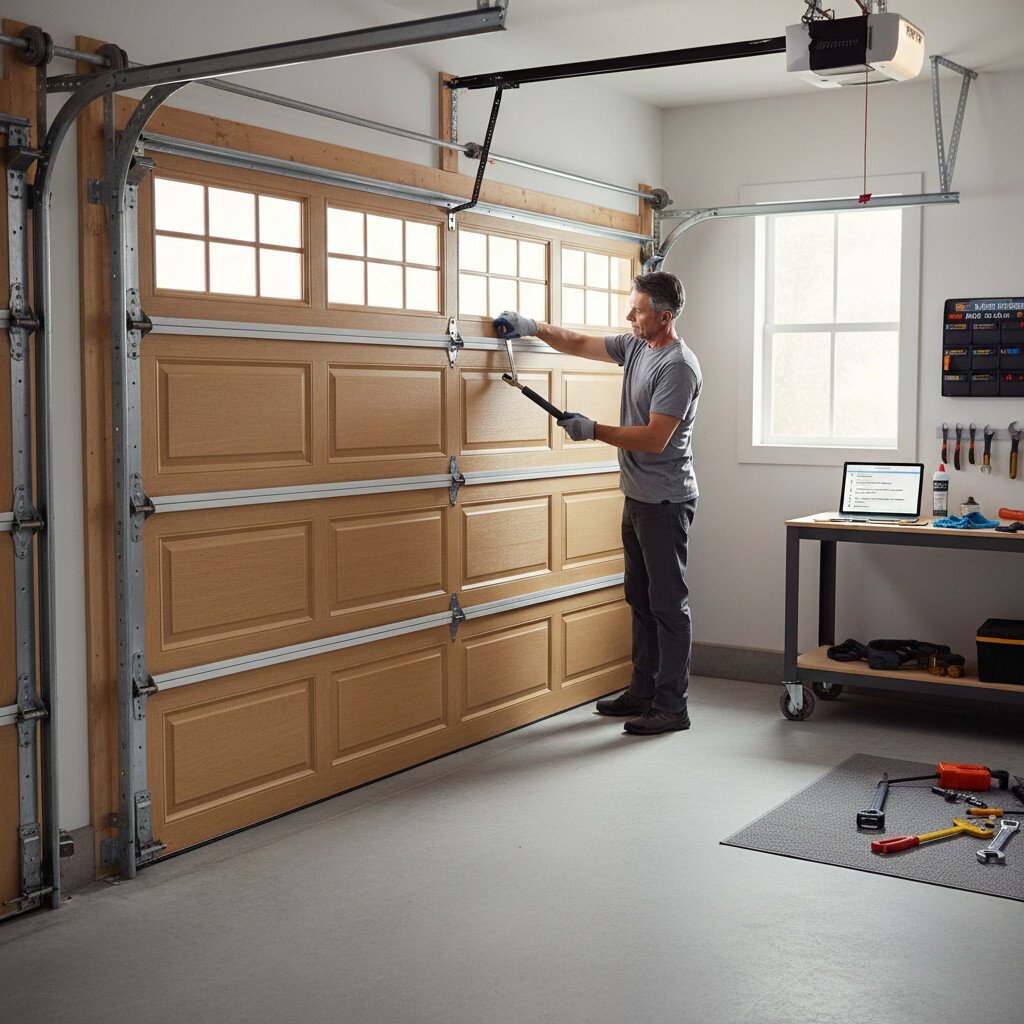
Regular maintenance preserves balance, reduces wear, and prevents failures.
Quarterly: test door balance (opener disengaged), verify auto-reverse and photo-eye with a 2×4, clean and tighten fasteners, and lubricate hinges and opener drive (not tracks) per manufacturer instructions. Check weatherstripping and replace if damaged.
Annually: measure opener force and travel limits, update battery backups, review cycle counts, and document all findings.
Hardware Wear: Springs, Rollers, and Cables
Wear concentrates on torsion/extension springs, rollers, and lift cables due to tension and bending.
Springs fatigue from cycles, poor tension, or wrong wire size; inspect for gaps, rust, and elongation. Rollers travel thousands of feet—sealed ball-bearing nylon rollers reduce friction, noise, and stem wear; check stems for wobble or flat spots.
Cables corrode or fray near drums and brackets; replace at the first sign of damage. Verify drum screws, cable alignment, and track plumb to prevent side-loading and premature wear.
Opener Type, Balance, and Insulation Efficiency
Opener, door balance, and insulation determine load, energy use, and lifespan.
Choose opener to match door weight and duty: DC belt drives reduce shock; jackshafts minimize vibration. Ensure the door holds mid-travel; adjust springs if it drifts to reduce motor stress. Verify lift after panel or hardware changes.
Higher R-values add weight but stabilize temperatures; use correctly sized springs to offset mass. Log current draw regularly.
An opener that’s mismatched to door weight can strain the system, so choosing the right garage door opener can extend lifespan by reducing unnecessary load.
Conclusion
You extend your garage door’s lifespan by prioritizing build quality, correct installation, and disciplined maintenance. Pay attention to climate stresses, cycle ratings, and hardware wear—especially torsion springs and rollers. One telling statistic: a standard torsion spring is rated for about 10,000 cycles—roughly 7–10 years at 3–4 uses per day—so proactive replacement prevents cascading failures. Ensure proper balance, smooth track alignment, and a well-matched opener. Insulation and weatherseals also reduce thermal stress, moisture intrusion, and noise, preserving long-term performance.