Like insulation in a winter jacket, the right garage door can cut heat loss by up to 20% and quiet street noise. You’ll weigh materials—insulated steel, aluminum, composite, or wood—against climate, R‑value, and corrosion resistance. Then, match panel style and glazing to architecture, and pick a belt-drive opener with battery backup and Wi‑Fi for reliability. Finally, factor in maintenance cycles, wind ratings, and installation costs. One choice determines comfort, security, and bills—are you optimizing or guessing?
Key Takeaways
- Choose materials by climate: insulated steel for durability, aluminum for lightness, wood for aesthetics, composites for stability.
- Prioritize insulation: polyurethane foam cores (R-12 to R-18) outperform polystyrene; add thermal breaks and full-perimeter weather seals.
- Match style to architecture: raised-panel, carriage-style, or contemporary flat skins with coordinated window placements and colors.
- Select a quiet, reliable opener: belt- or screw-drive with DC motor, battery backup, and secure Wi‑Fi smart controls.
- Ensure longevity: 20k–30k cycle torsion springs, 14‑gauge hinges, reinforced struts, stainless hardware in coastal areas, and biannual lubrication.
Understanding Garage Door Materials
Compare garage door materials by structure, performance, and maintenance.
Steel: lower gauges = thicker skins, better dent and wind resistance; galvanised, baked-on finishes reduce corrosion; add polyurethane for coastal exposure.
Aluminum: lightweight, rust-resistant, suitable for oversized doors, but more dent-prone; use thicker extrusions and reinforced stiles.
Wood: rigid, trimmable, premium look; requires sealed edges, drip caps, and scheduled refinishing.
Composite: wood-like appearance, stable core, minimal swelling, factory finishes; check screw-holding and edge sealing.
Standardise hardware: heavy-duty hinges, sealed rollers, and torsion springs matched to door weight.
To compare durability, maintenance, and performance, review garage door installation materials before selecting the best option for your home.
Insulation Levels and Energy Efficiency
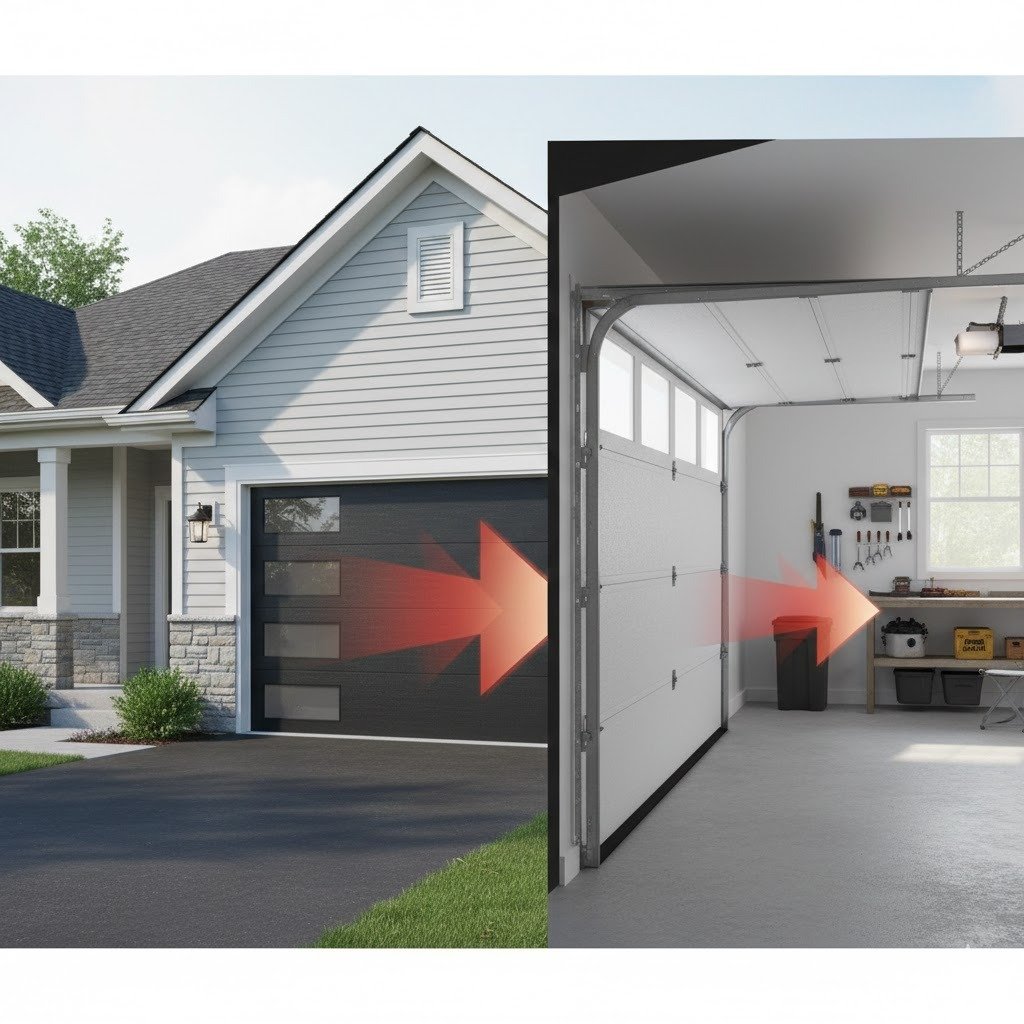
Assess how insulation affects thermal performance, comfort, and operating costs. Polystyrene panels offer moderate insulation at a lower cost; polyurethane foam cores provide higher R-values, tighter air seals, and greater rigidity.
Use thermal breaks between skins and dual- or triple-layer doors for durability and acoustic control. Check weatherstripping—bottom, side, and header seals—and ensure perimeter fit and track alignment.
In extreme climates, select higher R-values to stabilise temperature, protect adjacent spaces, reduce HVAC load, and improve quiet, smooth operation.
Even the best-insulated doors underperform if installed incorrectly, which is why energy efficiency starts with proper garage door installation.
Style Options: Traditional, Carriage-House, and Modern
You’ll compare three design paths: classic raised-panel profiles with defined embossing and symmetry, rustic carriage-style layouts with faux strap hinges and optional arched lites, and sleek contemporary minimalism with flush panels and narrow glass.
Match panel geometry, window placements, and hardware finishes to your façade, roofline, and door proportions to maintain visual balance.
To streamline selection, set constraints for material, color, and glazing first, then evaluate each style’s SKU options against those specs.
Classic Raised-Panel Looks
Decide how a raised-panel profile fits your home’s architecture and performance goals. Use panel variations: short panels for compact façades, long panels for wide openings; recessed edges soften shadows. Maintain symmetry, tight reveals, and minimal hardware.
Specify steel skins with 0.25–0.38 in embossing or composite overlays for sharp corners. Use 18–24 gauge steel for impact resistance and baked-on polyester for UV stability.
Place window sills only in the top row. Confirm wind-load ratings, triple-lip seals, and quiet nylon-roller tracks to match performance with appearance.
Rustic Carriage-Style Charm
Although inspired by barn doors, carriage-style garage doors must balance authenticity with modern performance across Traditional, Carriage-House, and Modern interpretations. You’ll specify insulated steel or composite cladding over a rigid frame to resist racking, then overlay faux-stile boards for rustic aesthetics without warping. Choose vertically grained finishes, polyurethane cores (R-12+), and weatherseals to control infiltration. Hinge placement, strap accents, and speakeasy grilles deliver period cues; select corrosion-resistant door hardware with sealed fasteners to avoid galvanic staining.
| Visual Cue | Technical Choice |
|---|---|
| Crossbucks | Engineered overlays, moisture-stable |
| Iron straps | Powder-coated 304 stainless |
| Clavos | Through-bolted, gasketed heads |
| Lantern windows | Low-E, tempered, divided-lite |
Specify torsion springs tuned to overlay mass, quiet belt-drive openers, and ball-bearing rollers to preserve the carriage-house look with durable, low-maintenance operation.
Sleek Contemporary Minimalism
For sleek minimalism, use flat-panel skins, tight sightlines, and a restrained material palette.
Specify smooth steel or aluminum panels, concealed hinges, and perimeter-framed glazing.
- Traditional: single-slab skins, narrow evenly spaced lites, colour-matched hardware.
- Carriage-House: shallow V-grooves, omit strap hinges, low-gloss finishes.
- Modern: anodised aluminium, frameless glass, or composite with continuous horizontal reveals.
Optimise function with 2–3 in polyurethane (R‑18+), thermal breaks, and bulb seals. Hide operators with jackshaft openers. Standardize colors (black, bronze, warm gray) and micro-textures to reduce glare and fingerprints
Choosing the Right Opener and Smart Features
You’ll compare opener types—chain, belt, screw, and direct drive—by torque rating, noise profile, maintenance needs, speed, and compatibility with insulated or oversized doors.
You’ll match smart connectivity essentials such as Wi‑Fi, encrypted access control, battery backup reporting, geofencing, and sensor integration with your security and automation platform.
You’ll prioritize UL 325 safety compliance, rolling‑code tech, and firmware update support to ensure reliability and long-term serviceability.
Door weight and design affect opener performance, so choosing the right garage door opener is essential for smooth and reliable operation.
Opener Types Compared
Even if you love your current door, the right opener determines noise, speed, longevity, and smart control.
Compare opener types by drive mechanism and motor design. Chain-drive units deliver high torque for heavy insulated doors but run louder. Belt-drive systems use reinforced belts for quiet, quick travel and lower vibration. Screw-drive openers offer fewer moving parts, solid mid-speed operation, and minimal maintenance in stable temperatures.
DC motors add soft-start/stop, battery backup, and precise force control; AC motors are durable but less refined.
Key opener features to prioritize include robust rail alignment, torsion spring compatibility, safety sensors, and advanced force-sensing to protect panels and tracks.
- Match door weight, size, and cycle demand to torque and duty rating.
- Specify noise limits by dB for adjacent living spaces.
- Validate warranty terms on belts, motors, and electronics.
Smart Connectivity Essentials
Smart features control, monitor, and secure the door. Ensure the opener supports Wi‑Fi, encrypted tokens, and two-factor verification. Choose platforms with Alexa, Google, Apple Home, or Matter integration. Verify sensor accuracy (tilt/position, force reversal, battery status).
Include geofencing, multi-user permissions, activity logs, rolling-code encryption, auto-lockout, and firmware updates. Support APIs or IFTTT routines and HDR/event-based cameras. Confirm local control fallback and assess noise, range, and RF interference for reliable operation.
Durability, Maintenance, and Longevity
Because a garage door faces constant cycles, weather, and impact risk, durability starts with material selection, construction, and protective finishes that match your climate and usage.
Durability starts with climate-matched materials, robust construction, and protective finishes for your garage door.
Evaluate material strength (gauge in steel, species in wood, tensile rating in aluminium) and panel construction (single-, double-, or triple-layer with polyurethane foam). Heavier hardware—torsion springs rated for 20k–30k cycles, 14-gauge hinges, and sealed bearings—extends lifespan and lowers maintenance frequency.
Specify reinforced struts on wide doors to prevent deflection and fastener loosening. Choose factory-applied powder coat or anodizing to reduce surface degradation. Lubricate rollers, hinges, and springs biannually, and test balance monthly.
1) Track alignment: verify plumb/level, adjust brackets to cut roller wear.
2) Seal integrity: replace bottom astragal to protect edges.
3) Opener load: set force limits correctly to prevent over-torque.
Your door choice today impacts years of performance, and understanding garage door lifespan after installation helps you avoid premature wear.
Weather Resistance and Climate Considerations
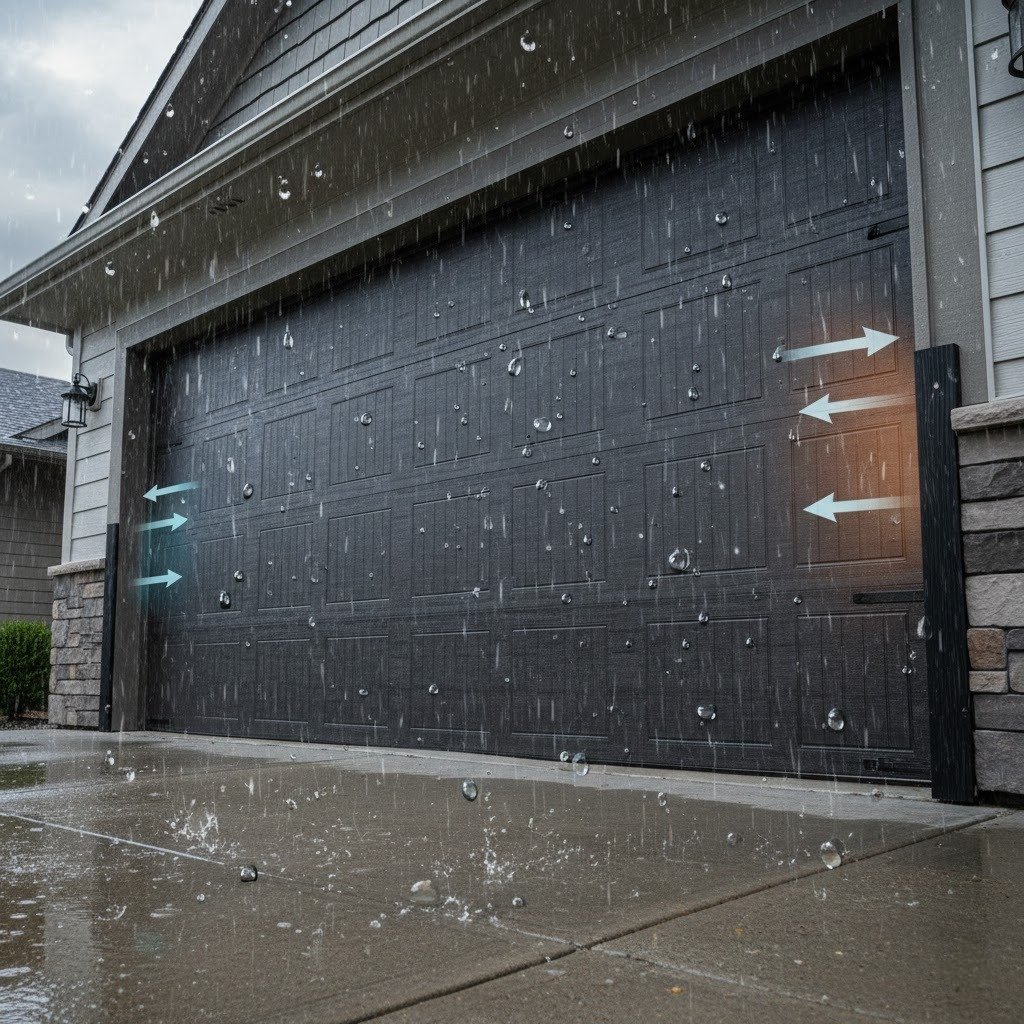
When you match a garage door to your climate, you control energy loss, corrosion, and premature wear. Start by assessing climate impact: temperature swings, humidity, salt exposure, wind load, and UV intensity. Choose insulated steel or fiberglass skins with polyurethane cores (R-12 to R-18) for thermal stability. In coastal zones, specify marine-grade stainless hardware and powder-coated, G90+ galvanized steel to resist salt creep. In wet or snowy regions, prioritize full-perimeter weather sealing, bottom astragals with dual lips, and thermal breaks to block capillary water and conductive losses. In high-wind areas, select doors with tested design pressures and reinforced struts. Inspect seals annually; replace compressed gaskets and adjust tracks to maintain compression.
| Climate | Priority | Solution |
|---|---|---|
| Cold | Heat loss | Polyurethane insulation, thermal breaks |
| Coastal | Corrosion | G90+ steel, stainless hardware |
| Humid | Moisture | EPDM weather sealing, tight astragal |
| Wind-prone | Uplift | Wind-rated bracing, heavier gauge |
Noise Reduction and Smooth Operation
Even in a busy household, you can engineer a garage door to run quietly by targeting vibration sources and friction points. Start with a belt-drive or direct-drive opener; both cut gear chatter and improve operational efficiency. Specify nylon rollers with sealed bearings to reduce track rumble. Add rubber isolation pads between the opener, header, and ceiling joists for effective noise dampening.
Tighten hinge and track fasteners to spec and align tracks to eliminate binding. Lubricate torsion springs, hinges, and roller stems with lithium-based grease; avoid the tracks.
- Select balanced hardware: matched torsion springs, true tracks, and reinforced struts minimize resonance.
- Decouple structure: vibration-isolating mounts and neoprene bushings prevent sound transfer into framing.
- Control motion: soft-start/stop motors and smart travel limits lower impact loads and noise.
Budget, Value, and Installation Tips
Although price tags vary widely, you’ll stretch your budget by prioritizing components with the highest lifecycle value and planning installation to avoid rework.
Choose budget friendly options like insulated steel doors with polyurethane cores; they deliver thermal efficiency and rigidity without premium costs.
Compare R‑values, wind ratings, and cycle ratings on springs (aim for 20k+ cycles). Use sealed, ball‑bearing rollers and a DC belt‑drive opener with soft start/stop to reduce wear.
Key installation considerations: verify rough opening square within 1/8 inch, reinforce jambs and header, and install a continuous angle iron opener mount.
Specify a properly sized torsion spring set, nylon rollers, and a double‑strut top section for opener loads. Seal thresholds, adjust track plumb, and calibrate force limits.
Document serials for warranty.
Beyond the door price itself, reviewing garage door installation cost factors helps you budget more accurately for the full project.
Conclusion
By weighing materials, R-values, and opener tech, you align performance with your home’s architecture and climate. Choose insulated steel or composite for durability, upgrade seals and rollers for quieter operation, and specify a belt-drive opener with battery backup and smart controls. Like choosing the right armor for Achilles, your selection turns vulnerabilities into strengths—energy savings, security, and longevity. Set a clear budget, get professional installation, and schedule annual tune-ups to keep everything calibrated, safe, and operating at peak efficiency.