With 30,000+ average garage door cycles defining service life, you can’t just pick parts by price. You’ll match door weight, height, and wind-load to spring IPPT, track gauge, and hinge rating. Climate drives R-value, thermal breaks, and corrosion-resistant hardware. Opener horsepower and drive type must suit a balanced door, with soft-start/stop and integrated photo-eyes. Low-friction rollers and vibration isolation cut noise. Get these choices right now, or risk premature failure and costly callbacks—next, you’ll size components precisely.
Key Takeaways
- Assess climate, door size, and usage to set durability, corrosion resistance, insulation, and duty cycle requirements within budget.
- Select door material and insulation to meet R-value targets; prioritize polyurethane cores, thermal breaks, and quality weather seals.
- Size springs, tracks, and hardware to verified door weight, height, and headroom; choose high-cycle torsion springs and rated cables/hinges.
- Match opener to balanced door weight and lift type; prefer DC motors with soft-start/stop, battery backup, and required safety features.
- Upgrade rollers and noise control: sealed-bearing nylon rollers, proper track alignment, high-quality lubrication, and vibration-isolation pads.
Before choosing parts, it helps to understand how garage door installation works so each component choice makes sense.
Assess Your Climate, Usage, and Budget
Define operating conditions before selecting brands or styles: local climate (temperature swings, humidity, wind, coastal salt), duty cycle (daily open/close, door size/weight), and budget.
Translate climate into specifications: verify wind rating per ASCE 7, corrosion resistance for marine environments, and tolerances for freeze-thaw cycles.
Match duty cycle to drive type and torque: determine door mass, track friction, and starting torque; select opener horsepower and cycle rating (residential vs. light-commercial).
Choose a spring system based on IPPT, cycle life, and serviceability.
Specify hardware (rollers, hinges, cables) by load rating and environment.
Align choices with budget by prioritising safety-critical components, lifecycle cost, and maintenance; avoid cutting corners on springs, cables, or safety sensors.
If you’re balancing quality and price, review garage door installation cost factors to decide where upgrades matter most.
Select the Right Door Material and Insulation
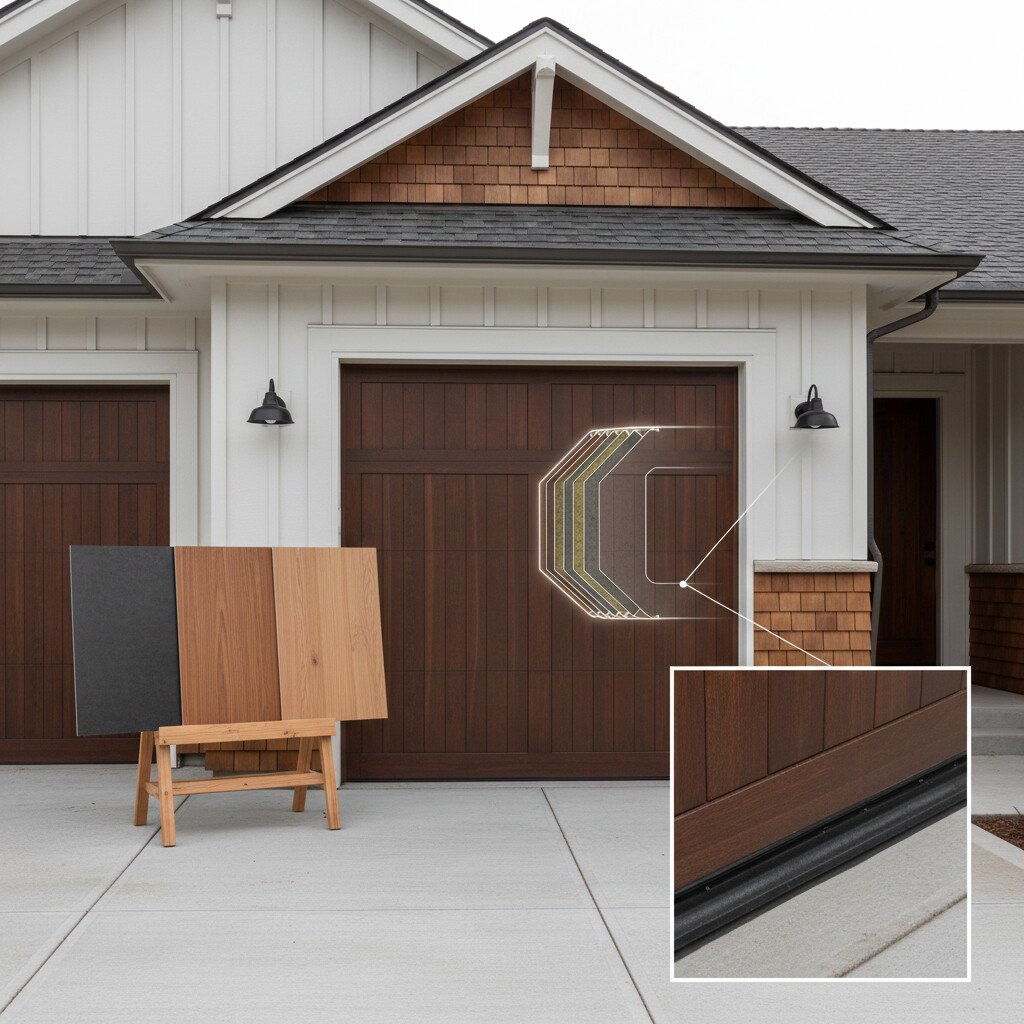
Start by narrowing materials to match performance targets: steel (24–27 ga) for durability and security, aluminum for corrosion resistance and weight savings, fiberglass/composite for dent resistance in coastal climates, and wood for aesthetics with higher maintenance. Evaluate door aesthetics against thermal performance: choose panel profiles, window lites, and finishes that complement the façade while meeting U-factor targets.
Select insulation types based on climate and usage. Polystyrene (expanded) offers cost-effective R-values; polyurethane (foamed-in-place) delivers higher R/inch, better air sealing, and panel rigidity. Look for thermal breaks, bulb seals, and continuous end caps to limit thermal bridging.
| Material | Typical R-value Range | Best Use Case |
|---|---|---|
| Steel + Polyurethane | R-12–R-18 | Conditioned garages |
| Aluminum + Polyurethane | R-8–R-14 | Coastal, lightweight |
| Wood/Composite + Polystyrene | R-6–R-10 | Heritage door aesthetics |
Your component choices should match your door build, so compare garage door installation materials before finalizing hardware and insulation.
Choose Springs, Tracks, and Hardware for Load and Safety
Even with the right door panels, the system only performs safely if you size and spec the counterbalance, tracks, and hardware to the door’s actual load and duty.
Verify door weight, height, cycle rating, and headroom before selecting spring types, track sizes, and fasteners. Choose torsion springs for precise balance and longer life; use high-cycle wire and matched left/right wind.
For low headroom, consider double-track torsion or reverse-angle brackets. Specify gauge, radius, and vertical lift per clearance and drum size. Use sealed bearings, rated hinges, and 3/16-inch aircraft cable with safety factors.
- Match spring types to weight and required cycles.
- Select track sizes, gauge, and radius per clearance.
- Specify drums, cables, and bearings by load.
- Torque, level, and test per ANSI/DASMA standards.
Spring size and track fit depend on accurate garage door installation measurements, especially door height, width, and weight.
Pick the Opener: Horsepower, Drive Type, and Smart Features
With springs, tracks, and hardware sized to the door’s load, you can spec an operator that won’t strain or underperform.
Match horsepower to balanced weight: 1/2 HP suits most single steel doors, 3/4 HP handles insulated doubles, and 1–1.25 HP serves heavy wood or oversized panels.
Match opener horsepower to balanced door weight: 1/2 HP single steel, 3/4 HP insulated double, 1–1.25 HP heavy wood or oversize.
Choose opener types by drive mechanism: chain-drive for budget strength, belt-drive for quiet duty and steady torque, direct-drive or jackshaft for high-lift or obstructed ceilings.
Verify duty cycle and soft-start/soft-stop to reduce shock loads.
Prioritize DC motors for variable speed and battery backup.
Require safety features: photo-eyes, auto-reverse, and force sensing.
Specify smart connectivity for remote monitoring, scheduling, geofencing, and integration with platforms like HomeKit or Alexa.
Confirm rolling-code security and encrypted Wi‑Fi for hardened access.
To avoid compatibility issues and performance problems, choose the right garage door opener for your door weight and usage.
Optimize Rollers and Noise Control for Smooth Operation
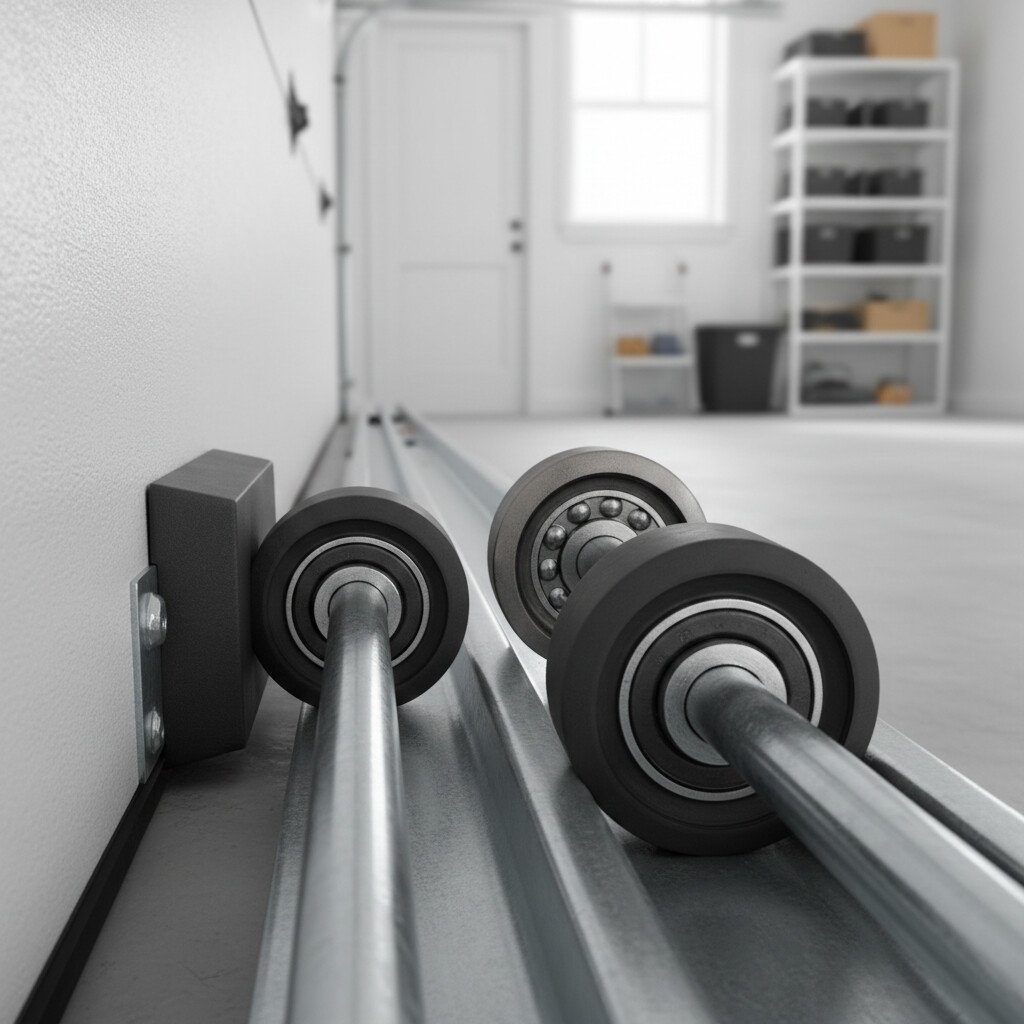
Although the opener sets the pace, rollers determine how quietly and efficiently the door glides through the tracks. Upgrade roller quality to sealed-bearing nylon or steel with precision races. Nylon offers superior noise reduction and corrosion resistance; steel handles heavier loads but transmits more vibration.
Match stem diameter and length to your hinge gauge, and verify track alignment to prevent side-loads that accelerate wear.
- Choose 13-ball sealed nylon rollers for residential doors under 300 lbs; use heavy-duty steel for commercial or high-cycle applications.
- Inspect hinge knuckles and track seams; replace bent hardware to maintain true travel and minimize resonance.
- Apply lithium or PTFE lubricant to bearings and hinges; avoid spraying tracks.
- Add neoprene isolation pads on opener mounts and strut doors to damp vibration paths.
Conclusion
You’ve matched components to climate, load, and budget, so your system will run safely and efficiently. For example, in Minneapolis, you might spec a 1¾” insulated steel door (R‑12), paired with oil‑tempered torsion springs sized to 15,000 cycles, 3″ high‑lift tracks, nylon‑coated 13‑ball rollers, and a ¾‑HP DC belt‑drive opener with soft‑start/stop and photo‑eyes. You’ll reduce noise, improve thermal performance, and extend service life—because every part supports balance, code compliance, and predictable maintenance.