
An 8-Step Garage Door Maintenance Checklist for Homeowners
A garage door maintenance checklist has 8 checks: tests monthly, lubrication yearly. The list runs from a hands-off look at springs and cables through the balance, 1-1/2 inch reversal and photo-eye tests to lubrication, bolt tightening, a seal check and a track wipe-down. Chamberlain's published schedule sets the intervals. Springs, cables and bottom brackets carry spring tension and stay with a technician.
Garage door maintenance schedule at a glance
Chamberlain’s schedule puts the safety tests every month, lubrication once a year and opener rail grease every 2 to 3 years.
Monthly
Visual check of springs and cables, balance test, reversal test and photo-eye test.
Yearly
Lubrication, bolt check, seal check and battery backup test.
Every 2 to 3 years
White lithium grease on the opener rail.
What is included in garage door maintenance?
Garage door maintenance includes a visual check of springs and cables, the balance, reversal and photo-eye tests, lubrication of hinges, rollers and bearings, tightening of non-tension bolts, and a weatherseal check. Spring and cable adjustment belongs to a technician tune-up.
The reversal test checks the auto-reverse feature, which turns a closing door back up when it meets an obstruction. The photo-eye test checks the safety sensors, a pair of small lenses beside the door at the bottom of the tracks. Each sensor carries a small light, and the guide to garage door sensor green and yellow lights explains which colors are normal. Both tests protect people and pets under the door, which is why they run monthly.
The spring, cable and balance work is the other half of upkeep, handled in a garage door tune-up. In Forsyth County, where half the homes date from 1984 or earlier, a garage door tune-up in Winston-Salem runs the same balance and reversal tests on doors that have outlived their first springs.
The garage door maintenance checklist, step by step
Work through 8 checks in order: look at springs and cables, test balance, test reversal, test the photo-eyes, lubricate, tighten non-tension bolts, inspect the seals and wipe the tracks. DASMA’s matching inspection takes about 15 minutes with a tape measure, flashlight and 2×4.
Springs, lift cables and bottom brackets hold the door’s full weight under tension. Look at them; never loosen, adjust or remove them, and never touch fasteners painted red.
Look at the springs, cables and bottom brackets
Keep the door closed. A gap in a spring coil, frayed or rusty cable strands or a loose bracket ends the checklist and starts a technician call. Frayed strands come first; a garage door cable that broke on one side comes next and drops that corner of the door.
Test the balance
Pull the red release with the door closed, lift the door to halfway and let go. A balanced door stays 3 to 4 ft above the floor. A door that moves fails the test.
Test auto-reverse
Lay a 2×4 flat under the door’s center and close the door. It reverses on contact. North Carolina home inspectors report openers that fail to reverse, under rules effective June 1, 2026.
Test the photo-eyes
Close the door and pass an object through the beam. The door returns to fully open. The beam sits no more than 6 in above the floor.
Lubricate the moving parts
Spray the hinge pivots and metal roller bearings, then run the door several times to spread the lubricant.
Tighten the non-tension bolts
Use a nut driver on the hinge and track-bracket bolts. Leave the bottom brackets and every red-painted fastener alone.
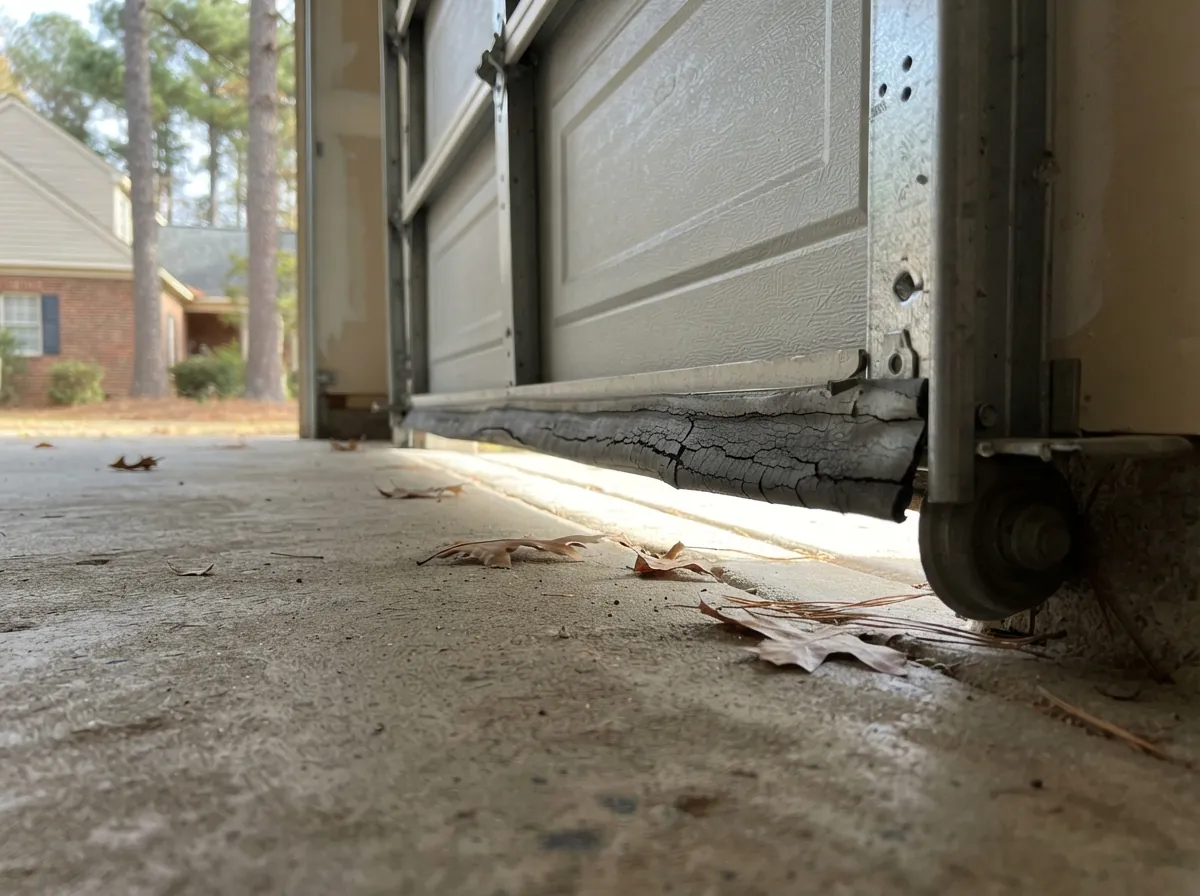
Inspect the seals
Look at the bottom and perimeter seals from inside with the door closed. Daylight, cracks, tears or mold mean a worn seal.
Wipe both tracks
Use a dry cloth, then check the tracks for dents or bends.
What does the lubrication check cover?
The lubrication check covers metal hinge pivots, metal roller bearings and the spring coils once a year, and leaves the tracks dry. The part-by-part table, products and timing are in how to lubricate a garage door.
How often does a garage door need maintenance?
A garage door needs its reversal and photo-eye tests monthly, lubrication of rollers, bearings and hinges once a year, and fresh grease on the opener rail every 2 to 3 years, per Chamberlain. A visual inspection belongs in each monthly check.
- Monthly
- Visual check, balance test, reversal test and photo-eye test.
- Yearly
- Lubricate rollers, bearings and hinges, then test the battery backup by unplugging the opener and running the door.
- Every 2 to 3 years
- Grease the chain or screw rail with white lithium grease.
When to call a technician after a maintenance check
Three parts on this door are never part of a homeowner checklist: the springs, the lift cables and the bottom brackets.
Call a technician when the door fails the balance test, fails either reversal test, shows a gap in a spring, has a frayed cable or a loose bottom bracket, or rubs and binds in the track. Those parts carry spring tension.
Failed balance test
The door drifts down or rises instead of holding at 3 to 4 ft.
Failed reversal or photo-eye test
The door does not turn back when it meets the 2×4 or the beam.
Gap in a spring coil
A broken spring leaves the door held by nothing.
Frayed cable or loose bottom bracket
Both carry the door’s weight under tension.
Rubbing or binding in the track
A bent track or worn roller needs a technician.
The technician states the price first, and work begins only after you agree to it. A call booked by 12 pm, Monday to Saturday, gets a same-day inspection visit, and no trip fee applies. Call (833) 752-1196, or request a garage door quote in writing.
Any failed test goes to garage door repair technicians, who are independent contractors and work with springs and cables under tension every day.